

Brands, Meet the AI Backlash

Full Moon delivers deep thinking on trends, strategy, and foresight from Mark Curtis and David Mattin. If you're reading this and you haven't yet subscribed, hit the button:
Hi Lunartiks!
(Skip this down to this week's idea if you're a paid member and you read our earlier e-mail!) Before we dive into this week’s Ideas newsletter, an update from Full Moon.
It’s hard to believe it, but we launched four moons ago now. Time flies! We’ve loved sending you our thinking on the future of design, brand strategy, consumer behaviour, and more. And we’re only just getting started.
Over time, and fuelled by the response we’ve had, an idea has taken hold. And now, it’s one we can’t shake. The idea is this: we need to set these ideas free.
We want our ideas — and that means our essays, podcasts, and newsletters — to reach out into the world and do what good ideas should do. That is, to spread. To become useful to as many people as possible. To spark new creative fires. To find agreement, criticism, and debate.
So we’ve made a decision. We’re setting all our work free. All future essays and podcasts will be freely available to all, and we’re taking existing Full Moon content out from behind the paywall.
If you’re a paying member, you’ll soon receive a full refund. We’ve already written to you about this. Thanks so much for your early support; it has meant a huge amount.
This is a big shift for us, but we're sure it's the right move. We've seen above average conversion of our audience into paying members. But keeping our best writing behind a paywall feels less than optimum. And now, we believe we've hit upon a new model that will allow us to set our ideas free in the world and create the revenue stream that will support our work and the team around it
And the nature of that new model? We’ll be making an announcement soon. But a sneak preview: ideas for free, and counsel, deep context, and direct access for those who can invest. If you’re a leader contending with the frontiers that are technology, strategy, and human behaviour, we think you’ll be excited by what we have cooking.
And now, on with the Ideas.
A cluster of stories have caught my eye across the last few weeks. Taken together, they point towards the way this AI moment is colliding with brand. Colliding, that is, with how brands show up in the culture.
First, some new data.
A Gartner study published last month found that half of the 1,500 US consumers surveyed say they'd prefer to give their business to brands that don't use generative AI in consumer-facing content. Meanwhile, 61% say they frequently question whether the information they use to make everyday decisions is reliable. And 68% frequently wonder whether the content they see is even real.
Those are intriguing findings. They describe a consumer environment in which a deep crisis of trust is becoming the dominant emotional texture of everyday life. Via an abundance of AI-generated simulation, people are losing confidence that anything they encounter — an ad, a product description, an image — is what it claims to be.
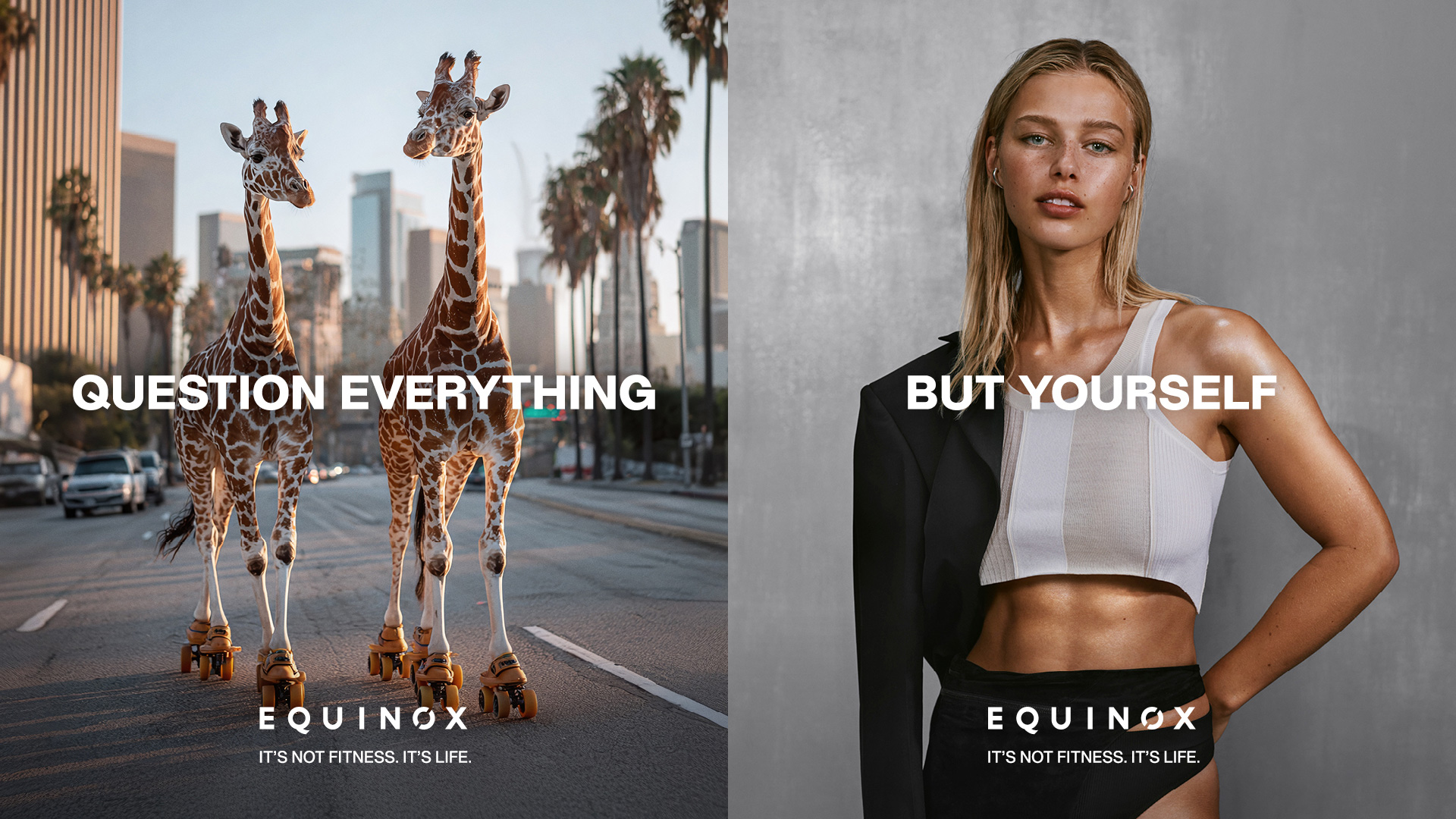
Now, brands are responding. Also last month, Adweek reported on a raft of organisations — including clothes brand Aerie and luxury fitness brand Equinox — who are launching campaigns that call out AI slop. Aerie pledged not to use AI in its advertising; the announcement became the brand's most-engaged Instagram post of the year. Equinox built a striking campaign that contrasted AI-generated fitness imagery with real human bodies. Tagline: 'Question everything but yourself'.
Meanwhile, US radio and podcast network iHeartMedia has rolled out a ‘guaranteed human’ tagline, with their own research finding 90% of listeners want media created by actual people.
These brands are doing something new, and intriguing. They’re taking a position in the AI culture war that we can all feel intensifying around us now. They are positioning themselves as explicitly anti-AI and — by extension, want to claim — pro-human. And in doing so they are making a kind of bet: that in a world saturated by AI-fuelled simulation, authenticity becomes the scarce commodity that builds brand.
They’re betting, in other words, that human intent and brand are fundamentally intertwined. This is an argument I made — from a different angle — in the most recent Full Moon essay, Only People Can Build Brands That Other People Care About.
The deeper context here is crucial. AI populism is growing more intense. Hostility to the technology is becoming a cultural force that extends far beyond brand strategy. This month, an anti-AI activist threw a Molotov cocktail at OpenAI CEO Sam Altman’s house; the 20-year-old from Texas was found carrying a manifesto that warned of humanity's extinction at the hands of AI. A growing number of people feel that something is being done to them, and to the world they knew, that they didn't ask for and can't control.
In short, AI is becoming the big question; it’s a conversation that resounds through our culture right now. And that means we’ll see more brands explicitly building a positioning around it. Many who do will embrace the anti positioning, and seek to position themselves as grounded in authenticity, care, and real human connection. My bet is that we’re going to see a tsunami of anti-AI brand campaigns across the next couple of years, just as we saw a host of brands embrace mass social movements such as #MeToo in the late 2010s.
Others, though, will lean in: ‘we use the machines to get you what you want, before you even knew you wanted it’.
Both can be coherent, and successful, brand positionings. For any organisation, though, navigating all this means addressing an age old imperative. That is, strategic clarity. Specifically, you need clarity on what kind of organisation you are, and the deep human needs that you exist to serve. Who are you, and where are you playing?
Is pure convenience and frictionless speed the reason consumers come to you? Or are you trying to tap into a set of human needs that run beyond the utilitarian? For any brand trying to figure out its positioning in relation to the big cultural conversation on AI, these are the questions to ask first.
Or, in other words: in the age of intelligent machines, brand, know thyself.
The intersection of brand strategy and the revolution being enacted by AI is only just getting underway; this story has so much more to teach us. Full Moon will keep watching.
Read Next

Is AI stretching your people?
Guest essay

Sign up for our webinar on how AI is changing Design
Event series

How is AI changing design?
Part III

How is AI changing Design?
Part II
Comments