

The knack of not experiencing

In 1955, the Swiss playwright Max Frisch offered a very provocative - maybe the best ever - definition of technology I have ever encountered. Technology, he wrote, is “the knack of arranging the world so that we do not have to experience it.”
I came across that line twenty years ago and it has stayed with me. In the age of artificial intelligence, I find myself thinking about it again - because we have just built the most sophisticated not-experiencing machine in human history.
The impulse Frisch identified is old and understandable. Since the beginning of the industrial age, Western culture has been on a relentless path away from direct contact with anything visceral, distasteful or demanding.
Warfare charts this trajectory with terrible clarity. Medieval combat was close, bodily unmistakable in its consequences. Until relatively recently, war was chiefly an affair carried out on foot and horseback. Killing and wounding were achieved either by hand using swords, pikes, clubs or by projectiles such as arrows, spears and rocks. The latter allowed men to project lethal force towards opponents some way from them, or hidden inside fortifications.
The advent of gunpowder greatly enhanced a combatant’s ability to deliver death at a distance. Cannon and muskets, later rifles and shells, changed the battlefield forever. Increasingly the soldier who pulled the trigger did not witness the result of his action close up. This became etched in data by the time of the First World War when the majority of fatalities on the Western Front were caused by shellfire. Of course vicious hand to hand fighting still took place, but the overall trend was clearly now away from face to face confrontation and towards remote aggression.
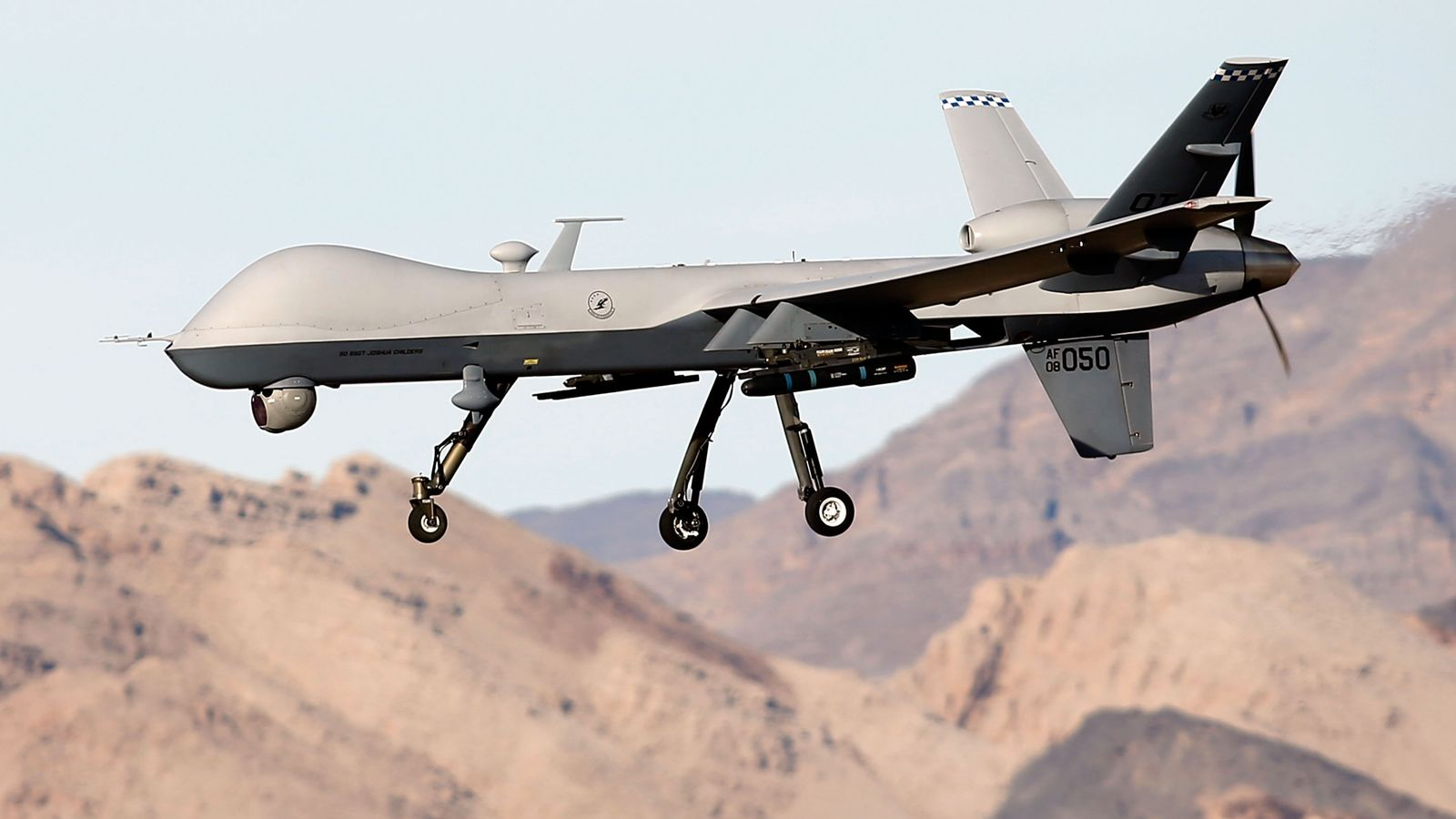
The drone strike is the logical next point of that journey: lethal force delivered from a room in Nevada or a village in Iran against a target in a country the operator has never visited.
Food tells the same story, from a gentler angle.
Ada, the heroine of the book and film 'Cold Mountain' has what seems a very modern, urban sensibility. Left to fend for herself on her deceased father’s country property, she is at a loss how to gather food “...even butter had proved beyond her means, for the milk she had tried to churn never firmed up beyond the consistency of a runny clabber. She wanted a bowl of chicken and dumplings and a peach pie, but had not a clue how one might arrive at them.” She is rescued by the arrival of country-wise Ruby who promptly despatches a cockerel that has been tormenting Ada, by pulling its head off. Later they eat it.
Are we all Adas now? Our relationship to food has utterly changed since industrialisation lead to the majority of Europeans and Americans living in towns and cities. It would be interesting to know what proportion of the population in Britain, for instance, has ever killed an animal in order to be able to eat it. Less than 1% I would guess. How many would be prepared to? We have become used to meat packaged in such a way as to disguise both its origins and explicit death for our nourishment.
I spent time as a young boy in a remote village in Andalucia in the early 1970s. Chickens came from the shop complete with heads and feet, unmistakably creatures that had recently been alive. My father once tried to buy a rabbit. He was directed to a neighbour’s stable, invited to choose one from among those frolicking in the straw, and told to go ahead. His hesitation said everything. The old woman who owned them understood immediately that he had expected someone else to do the dispatching. He had come to buy an abstraction - “rabbit for the table” - and discovered there was an experience standing between him and it.

Now that experience has been removed many times over. The meat is skinless, boneless, sauced and pre-cooked and the ingredients are assembled. The meal simply needs reheating. There are lots of practical reasons for this, and I am not making a case for going back.
Other examples abound of how we have put barriers and technology between ourselves and the world. The captain of a sailing ship had to be an expert in navigation, the complex interplay of sail, wind and rope, ballast, and leadership. Steam took away the requirement for many of his skills - discussing the likely advance of powered vessels, fictional naval captain Jack Aubrey complains in ‘The Fortune of War’ of “the probability that sailors should soon have to turn into vile mechanics”. Edward Tenner in ‘Why Things Bite Back’ points out how quills had to be sharpened and dipped in ink until the steel nib came along. Then replaceable cartridges removed the need for ink bottles, and in turn these have largely been replaced by disposable pens. The blue/black mucky stuff has been contained.
The direction of travel is clear: we have arranged things so that we do not have to experience any of it. When I came across Frisch in 2004, I was thinking about what digital technology was doing to us. Screens offered a new way to immerse ourselves in representations of the world rather than the world itself. We could watch a war, attend a meeting, visit a city, conduct a relationship - all without going anywhere or touching anything. The smartphone deepened this. The pandemic demonstrated it could be taken very far indeed.
But those technologies still required something of us. We had to look, read, write, respond, decide. The experience was mediated, but we were still in it. Artificial intelligence changes the equation. For the first time, the tool does not merely show us the world at a distance - it processes the world on our behalf and hands us a summary. We do not have to read the report; we receive its conclusions. We do not have to form a view of a situation; we receive an assessment. We do not have to write the email, draft the proposal, or sit with the problem long enough to understand it. The knack of arranging the world so that we do not have to experience it has now extended to thinking itself.
This matters especially to people who lead. Management has always carried a Frisch risk: the further up you go, the more your experience of the organisation is mediated by what others choose to surface. Dashboards, briefings, KPIs - all are technologies of not-experiencing. The leader who has not walked the factory floor, sat with the customer, or heard the unfiltered view of the front line is already, in Frisch’s terms, being managed by their tools.
AI makes this temptation almost irresistible. Why read the verbatim research when you can get a synthesis? Why sit with the ambiguity of a complex situation when the model will resolve it into a recommendation?
The answer is that experience is where understanding actually lives. The irreducible, uncomfortable, time-consuming, sometimes visceral contact with reality is not inefficiency to be engineered away. It is the source of the judgment that makes a leader worth following.
Frisch wrote his line seventy years ago. He had no idea how far we would take it.
The question he leaves us with is not whether to use the tools available to us - we should. It is whether we are using them to enhance our experience of the world, or to avoid it altogether.
Those are very different things, and the difference is worth knowing.
Read Next

The Full Moon Podcast
Episode 4 — Being Relevant


Being Relevant
Designing for Human Relevance

Creatures and Machines
An all-encompassing clash is coming
Comments