

Who Designs the Future When Everyone Can?
Part 2 of Where is Design Heading

🎧 If you're a paid subscriber and you'd prefer to listen to this essay, just head over to the audio version of Who Designs the Future When Everyone Can? 🎧
Introduction
AI is a game changer for how we conceive of, create, and sell products and services, whether we like it or not. That’s because it makes everyone a designer.
This massively affects how we are going to make great things we love in the next 10 years. And what we will then experience as humans.
I am going to unpack three big issues – who will make winning experiences, what they will make and why will we care. This is all about how you get to be different in the age of AI.
It is already way easier than ever to start a business, to create experiences. Yet power is concentrating in the hands of a few giant tech companies. How will those two statements balance out? Sheer levels of competition to make things, and deliver great experiences will be insane, chaotic.
So how do you get to great and stand out? Winners will have a clear intent behind what they make – difference will matter more than ever, delivered through a clear mission and the highest possible product quality.
The design of AI output itself is still in its infancy. We often imagine we are at maturity years before it actually arrives – we have a long way to go and the key to unlock this is asking: is any manifestation of AI a product or a feature? Trust and taste will be critical.
And last, humanity needs to be at the centre – not just of the whole AI project but each successful manifestation. Authenticity will command a premium, and that depends on humans being able to find a back story, satisfy themselves it is real, and revel in the delight of the new.
Let’s dive in and explore why how to be different is the key AI design question.
Like it or not, AI is going to be at the heart of how we make things. I’ve personally been in hand to hand combat with this conclusion for a while. At Accenture Life Trends (was Fjord Trends previously) we spotted the significance of GenAI pretty early in our 2023 report, published in 2022. We knew it was big. That was clear from the moment Midjourney, Dall E and Stable Diffusion emerged in the spring and summer of that year and changed visual creation for ever. Then we got lucky with our publishing schedule, launching soon after ChatGPT and able to make timely comment on it. As we said at the time:
“As we went to press with this report, ChatGPT emerged, suggesting a big leap forward in AI’s ability to create accurate and useful text, which may become a major challenger to search engines.”
We also predicted issues around people’s fears of being made redundant, and what a world with limitless content would look like. We didn’t foresee therabots.
We’ve all been swept up in the drama since then. There is a lot about AI I am deeply concerned about – notably the way privately held companies have taken all the world’s content for free, diverted energy, water and investment from elsewhere for a technology that doesn’t always work, and the long term effect on society if we surrender many jobs and divert our attention even more to digital conversations, and away from each other.
In my last piece, which looked at how we designed the last 30 digital years, I said
“You may be thinking, yep but I am not a designer. Truth be told, despite what my career signals to date, neither am I - strictly defined. So I am consciously using “design” to mean a very broad scope here. Anyone who plays a role in building and delivering products, services and experiences over digital channels, plays a “design” role – even if they do not wield a fistful of Crayola or use Figma.”
The difference now is we can all do design – or try to anyway. As ex-colleague and friend Andy Polaine used to say (somewhat caustically) “just because you can dance, doesn’t make you a dancer”. Nonetheless the new tools permit everyone to have a go. Some will use them well, some badly. So how we do we think about “design” if we want to do it well? Does it matter? Is there a role for people who have “design” in their title?
I’m going to show why the answers to these questions really do matter to everyone, especially those who create or reinvent products and services in the era of AI. There are three parts:
- How AI changes design (it’s about driving intention)
- The need to design the output of AI (it’s about the inherent need for differentiation)
- Putting humans at the centre (it’s going to be about authenticity)
Part 1: AI Changes the Game of Design
If you want to understand what is happening to design, listen to what designers are saying.
Nic Roope, ex Antirom and former colleague, pointed out to me something in plain sight: AI has consumed the entire quantity of all human design so far.
This on its own facilitates the notion that everyone can be a designer, because they can draw on the sum total visual, service, interaction, experience design and art as seen through the lens of a diffusion or large language model. Before you object violently to this statement, I don’t really think it’s as simple as that. Some critical things are missing, and we will come on to what. However, if the AI labs have not yet got all of design to date under their belt, they soon will. And that is a core issue to deal with.
Sidepoint: a lot of web and app design – which mediates how most people experience digital products – reached maturity in the late 2010s. What I mean by that is that we knew by then, after a 20 year process of trial, success and failure, what a “good” responsive website looked like, or where to signal “other things” in an app (think top left hamburger icon). AI has ingested a lot of know how that is provenly replicable. Hold that thought for what comes next.
Just as importantly, AI changes the tools and practice of design. Tom Webb, one of the most thoughtful young designers I worked with at Fjord, is very clear – “the process we defined and knew is gone. Now we can imagine, create and iterate on the go – then play with it on the device”. There are a multiplicity of tools to help with this, for example: Canva, Figma, Adobe Firefly, let alone directly in the leading LLMs. Indeed Canva now advertise their brand in public spaces: recently outdoors at Waterloo Station, London. According to Little Black Book “It’s a bold, tongue-in-cheek celebration of how Canva empowers anyone, at any skill level, to design with ease, creativity, and impact.”
Using a combination of tools Tom “can create a full stack product”. But he warns you still need to understand what is happening underneath – a significant caveat. The result is that time to output has declined drastically. In a single day you can create concepts, define user journeys, bring these to life and A/B test with “synthetic” audiences. Not only might this have taken weeks just three years ago, it can now be done by one person, not a team.
In fact the sequencing of when design is done may also have changed. Luke Wroblewski argues that as developers are moving at 10x their previous pace (I’ve heard this number from others too) they sprint ahead of designers who now “fix” the UX, as opposed to the classic model, developed over the last 30 years, where designers define UX first and developers try to implement. Another, maybe bigger, impact might be removing layers of unnecessary process in large organisations as decision making could go from committee to individual. Back to this in a moment.
Years ago when I ran a mobile dating start-up, I saw for myself the quality improvement when a developer and a designer worked physically alongside one another on product rather than sequentially. Wroblewski sees this happening now, and in some cases:
“an increasing number of designers are picking up AI coding tools themselves to prototype and even ship features. If developers can move this fast with AI, why can't designers? This lets them stay closer to the actual product rather than working in abstract mockups.”
This is the direction people like Tom Webb have been moving in for a few years now, where designers also do some coding. Yet again design lines are getting blurred, as we saw in my last essay on digital design across the last 30 years.
What’s the end game here? Two trends to consider.
Let’s put “design” aside for a second. What does all this mean for anyone who is making things? For entrepreneurs, products, service owners, brands?
To answer this, we need to look at two seemingly contradictory long term trends.
The first is that the entry barriers – and in some cases costs – to starting a business have been going down for years now. Though that’s probably not true of all business types, it has certainly got easier to create a purely digital business in the last 10 years. Offline is harder, but some benefits of tech have applied here too. Across the OECD, the time and cost to start a business dropped considerably from 2003 to 2019. The web itself, and software products like Shopify, Etsy, Stripe all facilitate entrepreneurs to get into market much faster than in a pre-internet age, and to offer more sophisticated pricing, and more accurate customer targeting. Since the late 1990s, digitisation has converted chunky, fixed, bespoke costs into modular, subscription-based building blocks – research, comms, marketing, payments, storefronts, logistics, the cloud – and compressed the time from idea to trading.
AI as a tool promises to accelerate this trend. If you follow a logical extension from Tom Webb’s observations (see above), then it’s not too long before we can all create new businesses at mind boggling speed, just by describing what we want to create. This is the end game to the so-called vibe coding approach.
There are deep issues with this vision. First, the code that AI throws out is not yet good enough to fully trust. We still need expert developers to QA, test, adjust. Second, it sort of works for fully digital businesses, but if you are setting up a physical business you still need supplies, premises, hardware, logistics. These take time, and can be hard. AI does not fill these gaps. Third and ironically, personal agents may undermine the market for new enterprises.
What’s the gap exactly between asking (say) ChatGPT, fully empowered by agents in the near future, to design and deliver a personal travel agent service just for the Curtis family, tuned to our unique desires, foibles and commitments, and then going on to create a business that does this for other people: an agent as a service? The first saves me time, and finds better, perhaps wonderful options for my family. The second (if it works) earns me money, too. OpenAI with their GPT approach have already opened the door to that upgrade path: my agent can make me money if I market it. Wabi is also heading in this direction. But the obvious problem is that if the agent creation on an LLM is easy, why would anyone need someone else to create such an agent for them? In other words, the very tech that enables new businesses may also render many of them redundant, because they cannot compete with what individuals can now do for themselves.
Indeed, as the FT reports, AI is rapidly becoming a personal assistant, probably much faster than it is being adopted formally by organisations. Unsurprisingly, it is much easier to fit AI into my daily needs and habits, than to integrate it into my work tasks alongside multiple systems and colleagues that need to be taken into consideration.
“Ronnie Chatterji, chief economist at OpenAI, said the findings highlighted how ChatGPT was primarily being used to support decision making. The company found that non-work-related messages have grown to more than 70 per cent of all usage. “There’s a lot of focus on how AI can be used for jobs, which, as an economist, I think is important, but it turns out people are using AI today for decision support and to help better inform the things they are doing,” Chatterji said.
……The data suggests that for now at least, AI is an individual productivity tool — both at work and in our personal lives — rather than the broader workplace disrupter many in Big Tech predicted.”
This then takes us to the second long term trend: the growing power and centrality of the tech giants, taking more and more space in our lives. Google, Amazon, Meta, Apple, Microsoft – possibly OpenAI very soon – dominate to an extent that has no parallel in history, except maybe by totalitarian governments. Ironic, given the lip service Silicon Valley pays to ideas of freedom and choice. The paradox is that they have offered to entrepreneurs the core enablers for new business creation, but at the same time entrenched themselves structurally in a way that a) is hard to compete with and b) gives them the power to make or break so much other business. If you follow the logic of vibe coding enabling personal agents: who then is the business winner? The Economist call it tech’s Cronos syndrome.
“Think of the labs as Cronos, a titan in Greek mythology, trying to devour his children (or as Amazon, a titan of e-commerce, making products to undercut those that sell well on its platform)……….The big AI labs are striving to achieve artificial general intelligence, or AGI, which would make their models able to do most tasks that humans can do—including matching and potentially surpassing the appmakers’ capabilities. For now, there may still be room for everyone. But the writing is on the wall.”
What I have described above may be someone’s idea of an exciting dream, but I don’t think it will play out quite like that. I think people will continue to buy products and services made by others. Because…
1. Humans are pretty lazy. If a branded service comes along that can do the holiday agent thing for me, and (a critical and) I trust it, then I’ll probably veer that way rather than fiddle with LLM prompts to get exactly what I want. It probably depends on how good the self-curated agents are vs specialist businesses. My bet is that the latter win out.
2. The real world is full of hurdles and ditches that will take the agent economy some time to overcome. Actually planning a holiday for the Curtis family is hard and involves a lot of moving and opinionated parts, trust me. And humans are not logical. They are messy in their thinking, and desires shift with context, even from moment to moment. That’s hard for a rational agent driven by probability logic to keep up with. I know I struggle.
3. We’d have to believe that one (or maybe two) brands can handle all or most of our needs, whether or not AGI becomes real. I just don’t think humans are ready to trust so much of their lives to one or two solution providers. A brand is a bundle of promises. Can Claude or Chat GPT truly cover most or all promises of expertise and delivery reliably, and gain our trust to do so?
And where’s the fun in that? It would be like buying everything – all our clothes, food, holidays, bicycles and more – from H&M or Best Buy. Really? I think humans are too relentlessly curious and inventive to be voluntarily constrained like this. It’s the AI choice paradox: Chat GPT can give you everything you choose, but that’s no choice in the long run.
So who will make things?
I believe, then, that people will continue to buy digital products and services from others. Let’s imagine a future full of AI-based services. Who makes them?
I think its possible to envisage four types of creator.
The first is no big change in outline but a massive one in speed. Organisations continue to use (smaller) teams structured around some combination of design, development, and data. This process will be highly controlled in all probability and, in theory, very fast. Often they will use AI-enabled software as a service (SAAS) platforms, delivered by enterprise service companies like Salesforce and Microsoft. Again, more, and faster.
The second gets more radical. Employees themselves develop their own apps, especially for enterprise usage, using publicly available tools such as Claude. This looks a lot like an interesting kind of anarchy, and a nightmare for CIOs.
The third comes from an interesting view from Tom Webb. He envisages designers operating on their own or in small teams externally to business, but taking them best in class “product” with full stack design, as market ready as possible, and selling those as solutions. In this scenario, design consultancies turn into idea manufacturers.
“The broader market shift making more talent available could create competitive conditions where consultancies/individuals have to operate this way out of necessity. It becomes a by-product of the environment rather than a strategic decision from enterprises.”
In this model, brands run supply chain, operations, marketing and manage risk, but buy best in class digital solutions from external individuals or teams. For example, a high street bank might buy a fully designed AI personal finance adviser, which becomes the new account structure for their customers.
The fourth is the one I outlined above: highly empowered consumers create their own apps to run their lives, integrated via agents with all the external capabilities they need.
Today, the best that can be said is that we see a combination of all of the above. I do not fully buy Tom Webb’s hypothesis: my experience is that organisations come with quite a lot of ego and will be reluctant to totally outsource the core of their brand offering. But he’s not wrong that AI makes it way easier to imagine what a better bank (for example) might look like. Equally as I said, people are lazy and won’t want endlessly to fiddle with LLMs to create their own apps. Some technologists might imagine that’s the future, but they are usually thinking about what they themselves would like, rather than what most people would.
What all of these plotlines fail to recognise is organisational reality. Most companies simply cannot absorb all this operationally. (And can consumers? That’s a whole other issue to examine). If innovation output goes up dramatically, then what? All the new ideas still need to absorbed, integrated, taught. The likelihood is we are already seeing a dual speed world emerge where attitudes and processes cannot absorb the pace of the new.
Which brings us back full circle to service design. Remember that? The thing that we pioneered in the 2000s that got run over by the design thinking bandwagon? A primary job for service design was to assess and design systems of experience across complicated journeys. In plain speak, to design how things fit together.
Now, we'll have external suppliers and innovation teams creating so much more product. We'll have an empowered employee armed with AI, making design decisions that have far reaching consequences. Given all that, it’s easy see a huge need for service design's focus on holistic outcomes. Not only to ensure great experiences for customers and employees, but to engage in basic risk management and control. Think of it as a mapping of organisational seismology.
The intent behind design will matter more than ever
In an AI age, design is where the intent behind an experience lives. What do I mean by intent? It is the bundle of reasons that guide the choices we make beyond just very basic function. The role of intent is no different from before in fact, but with new tools, process and thinking.
If you want to to go beyond normal - to be different - follow these three principles.
1. You must go beyond “mehdiocrity”
As Accenture commented in the 2024 Life Trends report, the probabilistic nature of GenAI risks that we create similar things over and over again, indeed that eventually AI feeds on its own content to create new, but stale, content. We may be past that point already.
The bar for quality is both raised by AI and made easier to reach: many more people can write well, draw well, create impressive videos. But there is still a bar. It is just much higher and will eventually settle at a new level (and we cannot assume AI always produces perfect market ready work). Who then determines what great looks like? Obviously in the long run, if you are a capitalist, that’s the market. However there is always a phase before an experience ships when you really do not know how the market will embrace it. That’s where design needs to win. Nic Roope says “we have to find a new set of rules, which might mean jettisoning the old. Anything conventional risks feeling like slop”.
2. Be a missionary
I made an assumption above: that you will agree that great matters. Partly because if Research Analyst Michael Morton is right (see below), then it really will affect AI-driven product discovery. Partly because humans thrill to the idea of great – that which enhances our lives. Former Fjord colleague Alex Jones builds on this and suggested to me that we will see a massive shift in what we value because of AI’s abilities. That shift is towards human creativity. Alex said “design has always been about intentionality” (as opposed to doing things by accident). His view is that intent now gets supercharged. He uses a distinction from a quote by VC John Doerr - “we need teams of missionaries, not teams of mercenaries.” The mercenary approach is in the end all machine driven. The missionary approach – “is drawn from conviction, and we will celebrate this”.
Jo Barnard, who runs London based product design company, Morrama, says “we have to stand for more. We won’t be designing pretty things – at least that will not be the majority of what we do. We can’t just deliver faster slop”. Her view is inspiring – this is where an evangelical tone which design has embraced for years but lost sight of recently can find its voice again. She pointed me at a recent FT piece headed “designers abandoned their dreams of changing the world”.
"What happened to that sense of social purpose? Design today has clearly been struggling through a long existential crisis. The realisation that the field has been so fully co-opted by capital as a mechanism for making more useless stuff has hit hard. The burden sitting on the shoulders of design has become overwhelming: the climate crisis, the huge overproduction of things, the proliferation of plastics, the waste of resources, the extraction, fast fashion and the throwaway culture of consumption. No matter its good intentions, design is deeply complicit……Instead it desperately clings to a few final moments of spectacle, effect and affect. "
Ouch.
3. Product quality will trump any amount of marketing
Michael Morton in an interview with Ben Thompson (aka Stratechery) talks very persuasively about research he and his team laboriously did into running shoes.
“we’ll go back to the first example I used, shoes for flat-footed runners. What I did to start the exercise was I did hours and hours of research reading literally podiatry magazine posts, and every single post about the best running shoes for flat feet, I organized them, I ranked them, so what shoes got first and second, and we came out with some clear winners. “Here are the one, two, and three best running shoes for people with flat feet”, so we know what the best answer is.”
In a nutshell he then explains how at best Google results deliver, at the top of the page, one out of the best six shoes he found through his exhaustive human research. But the LLMs consistently showed up with five or six.
“So I sat down, I asked ChatGPT, I asked Gemini, I asked all the different models, “Hey, when I ask you what’s the best running shoe, what do you do?”, and they’ll tell you, “We go read all the expert websites”. That’s what Mike (his researcher) did, they go look at the product build materials, they go read reviews like on Amazon and Zappos, that’s a whole other fight that’s going on. And so Google is looking at this more formulaic. Who’s bidding? What’s the conversion rate? Where’s the information? The models look at all the knowledge behind that.”
In other words, LLMs cover so much more of the human experience that we have written down, and go deeper (including social) and thus get it right much more often. Its only one example, but if it is only half way on the money we will learn to trust the LLMs, quickly.
Optimistically, that strongly suggests product and experience quality will matter a very great deal more than ever before, because LLMs will surface them. There may be room for less brands as well. So – point one on the future for design – it’s the process and space we give to product, service and experience quality.
AI offers the opportunity – I’d say the absolute requirement given its massive social implications – for design to rethink its role and find mission: intent that is both commercial and deeply human.
In summary
To summarise so far: design is needed to ensure intent, which is critical to make things that are are different.
- AI makes everyone a designer
- It changes how we design, the tools we use, and maybe where design fits in a process
- We can make a lot more, faster. And who makes things will become more complicated, and there are consequences to this
- Organisations will need to carefully design how innovation integrates to reality
The Takeaway: AI has effectively "consumed" the history of design, democratizing the ability to create and collapsing the distance between idea and execution. But access isn't artistry. As barriers fall, we risk a flood of "vibe coded" mediocrity. The role of the designer shifts from making to meaning. That is, from being a mercenary of pixels, interaction, and layout to a missionary of intent. If everyone can design, the only thing that matters is why we design and the intentionality we bring to the chaos.
But there is another question lurking that needs tackling. So far I’ve been talking largely about the mechanics of designing experiences, not the design of those experiences themselves.
And that’s the second big differentiation challenge for design: imagining what great AI-driven products and services themselves look like, and how they perform.
Part 2: We need to design AI tools themselves
Early web sites often tried to look like directories. Online newspapers in 1996 drew their design approach from, er…newspapers. Thinking that TV was radio with added pictures, early TV announcers initially appeared at a desk with a microphone. Eventually form followed function, as we grasped what that function was.
The point is this: when a new medium emerges, it tends initially to adopt the format of an older medium.
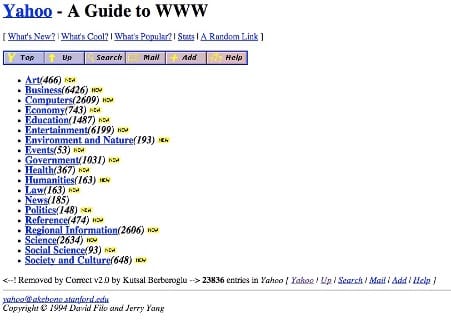
The same thing is playing out right now. All the most popular AI interfaces assume that the way to go is chatbots. There is some sense in this: the core of the LLM is conversation. History suggests that it won’t remain like that. For one thing chatbots are pretty dull to look at. On a larger screen they leave a lot of real estate empty that could carry more purpose and meaning. They are also extremely text based, despite AI being a multi-modal technology: it can understand and create text, audio, video. The full integration of these in interface is some way off, though Google are doing interesting work with Notebook LLM. The challenge of going fully multi-modal in interaction alone is a key next step for the technology.
Is AI a product or a feature?
Since Chat GPT emerged, Analyst Ben Evans has persistently asked the same question about AI: is it a product (a thing you go to on its own) or a feature (part of something else)?
Right now, we are seeing both futures. ChatGPT and Claude are definitely products. So is Gemini, but it is also a feature in Google Search: at the top, so pretty dominant. My Whoop health wearable is not an AI device in my mind, but there is an AI chatbot in the app interface called Whoop Coach – already pretty good and likely to get even better. I chat to my coach. Maybe in future I will think I am chatting to my health. In this case, AI is not everything (the product) but it’s a very useful feature, and perhaps soon to be critical.
The product or feature question matters to how we design AI into products. Is it dominant? Do we lead with it? What would a bank that led with AI look like and do? Should Whoop, for example, focus on conversation in each interaction? I’d argue not: currently it offers glanceable data (a key feature), which is what I want before any chat. Most of the time I do not want to chat, but I do want to know, at a glance, if I had a good night’s sleep, and how my resting heart rate is doing.
These choices are going to be very product and service and industry specific. They are design choices. Tom Webb’s view is that AI as “sparkly icon” will disappear quite quickly as AI features become deeply embedded through experiences.
Tramlines will emerge
Nonetheless, AI is a different kind of interaction with new capabilities. Already, best practice for AI interaction is emerging.
Emily Campbell at Shape of AI does a wonderful job of documenting these, identifying new categories such as Wayfinders, Tuners, Governors, Trust Builders and providing examples. Of course the long term challenge here is around both consistency and differentiation. The more everyone conforms to the “standard” way of doing things the more users look for that as primary navigational guidance.
For example, right now product LLMs are largely listing previous “chats” on the right hand side of the web page. When we visit a LLM we increasingly expect that feature to be there, or thereabouts. That’s great for the user but it also tramlines everything. Design orthodoxy mandates you should make it as easy for the user as possible. Pattern expectation is a no-brainer. And yet, that works against design innovation. It doesn’t make it impossible, but if you want to conform it takes chips off the table.
And Then Standing Out Matters
That matters, because as I have tried to show, AI will make differentiation harder, which in turn affects competition and growth. Think of the four different types of “manufacturer” using AI outlined above. If AIs know pretty much everything out there, and can deliver at speed, how do you stay ahead?
One answer is brand. Heritage, physical presence in the real world, a more relevant “bundle of promises” (my favourite definition of a brand): all these hand a big advantage, which is slow to erode, to existing brands. Except Kodak, famously.
We can also look back to see what has happened historically. Remember these insights from part 1 of this essay….
- Simplicity is both brave, hard and tough to stick with. AI will prove an irresistible technology to enable more and more features. Which ones really count?
- There is a recurring pattern at play here: experimentation → codification → diffusion → dilution. Where is your product on this line? Where do you want it to be?
- Technology change outpaces our ability to realise its consequences. Who is gazing into the near future and thinking through the unintended consequences?
- Feeling becomes the new functionality. As digital becomes – is already perhaps – pervasive – a sense of trust, calm, confidence, belonging - becomes a differentiator
If I had to sum these up, taste is the word I keep coming back to. Design – whoever does it – is the guardian of taste. The application of taste differentiates. I do not mean by this elite taste, though I have no problem with that idea. Years ago Andy Rundgren, the customer services lead at the mobile dating start up I ran, pointed out to me that our carefully designed freemium mobile gifts (gifs) were in some ways too refined in their illustration and animation. I said: what do you mean? He literally showed me classic Hallmark greetings cards, packed with sprinkles and stars and embossed gloss. Aesthetically I recoiled. But I suspected at once he was right. Taste means market fit. We added glitter. Users bought more.
Living Services/Living Interface?
In 2015 Fjord, by then a part of Accenture, published a piece of thought leadership called “Living Services”. It was well ahead of its time. We said:
“Living Services are the result of two powerful forces: the digitization of everything and ‘liquid’ consumer expectations. Living Services respond by wrapping around us, constantly learning more about our needs, intents and preferences, so that they can flex and adapt to make themselves more relevant, engaging and useful. Consumers demand this now as the standards are being set by the best of breed across the entirety of their experiences, not restricted by sector—hence liquid expectations.”
We guessed at the role that AI would play but without AI really being out there ready to deliver (in fact we really needed AI to enable the vision). Perhaps to be generous to our thinking, it was in the air already. We foresaw a huge impact on experience design:
“If a service is to ‘live’ in tune with our connected and demanding lives, it must learn and change continually so that it can match our needs seamlessly. Services will be assembled around the needs of the user in realtime; flowing through people’s lives and touching them in different ways at different points.”
Maybe we are on the cusp of this now. This then creates a massive design challenge. If interfaces change dynamically as a living service, which bits of the architecture remain consistent and which change?
The answers will differ widely from one service type to another, from your health to your money to your work. This is sometimes called “Generative Interfaces”. I now think there are good reasons to doubt that this vision will be fully realised, not the least brands don’t want to let go of their experience control. But this is the direction of travel that OpenAI seem to be embarked upon currently: to be the one ring that rules them all. It is likely they will find the lure of advertising dollars to be stronger than trying to be the only place where everything gets done without having to go anywhere else (so called zero click search), and that will also suit brands better.
Yet how can the same platform be therapist, HR advisor, provider of consumer choice, search engine, sales machine, financial advisor? This stretches credibility. It also speaks to the business model.
Everything depends on the business model
When it comes to AI as feature, the business model gets subsumed within a wider experience context. But it's clear that AI as product is still in search of a business model.
We’ve seen over the last 30 years the impact of algorithm-led business models on society. Given the chance to do it again, would we design social media as a way to convert attention into dollars in the same way, knowing what we know now about its effect on young people and politics? I am not arguing against social media as an idea, and recognise it has had benefits. But the attention-based business model has surely brought us negative consequences. Unless the majority of people end up paying for AI as product via subscriptions, it is hard to see any alternative to an advertising model. I suspect even subscribers will be shown ads too: witness what’s happened to Amazon Prime. The lure is just too great for businesses to resist.
Which brings us back to trust. How do I trust an LLM to meet my needs and those of advertisers? Can they effectively signal paid for or influenced content as opposed to pure unbiased research answers? Even if they do signpost clearly, will I trust the non-advertising responses so much? If I hire a butler (not going to happen I assure you), is he working for me to find and buy the best household products at the best price? Or is he working for Walmart? The sheer persuasive conversational power of LLMs – see my points from Michael Morton above – makes this an even more important issue than it was for Google and classic search as they began to monetise.
This, then, is another and urgent design task: creating trust, and squaring that with the emergent commercial model that are urgently required to give the AI labs an ROI.
The Takeaway
We are currently in the "radio with pictures" phase of AI: stuck in text-heavy chatbots that fail to utilize the medium's full potential. Is the AI you deliver a silent feature or a standalone product? If it is a product, it faces a crisis of trust: can an agent truly serve you if its business model is built on serving you ads? The next great challenge for design, then, is not just the interface, but the integrity of the system itself.
Part 3: Humans must be put at the centre
Authenticity is a meaning that makes a difference
Everything I have said so far has its roots in a core belief. It is that we need to put humans at the centre of AI. Right now we are in a classic technology phase of “build it and they will come”. The tech itself is front and centre, bolstered with vague utopian promises of a cure for everything that’s wrong with life. Someone needs to champion a shift towards putting humans at the centre, both at the micro level – how AI services perform and meet our needs – and the macro level of the effect of AI on society. Designers alone cannot do this. However, it is a job for design.
You can be cynical if you wish and say: who cares, the market should and will win. That’s fine, but the argument still applies. In a market where it’s easier than ever to copy, to win you will need trust. And that means putting humans at the centre.
Where will competitive advantage come from in an age of near-immediate copying, and empowerment of the individual to code their own solutions? I’d suggest as a starting list:
- Deals: who you partner with
- Attention and channels you use to get to market
- Supply – where you get stuff from
- Capital – and how you choose to apply it
- Barriers to entry – the higher the better (more than ever before)
None of these are new, of course, as differentiators. And they may be influenced by AI, yet they are also the result of choices humans make. There is one more – the biggest in my view – and that is to be human-centric in thinking and action. As Jo Barnard says “AI can design it, but not make it meaningful “.
Years ago, during the most egregiously stupid part of the dotcom boom, we took a meeting in Razorfish London with a funded “start-up”. Their proposition was to build a “portal” for students. At the time everybody wanted to build portals; it was all the rage. They came into our Smithfield studio. All male, all in their mid 30’s, all exuded that masters of the universe vibe that comes from working in high-end finance, bolstered by MBAs, armoured by button down shirts and chinos. They had all the money, all the plans. Except, it turned out they had no students on their team, and no plans to talk to any. Fifteen years or more on from being undergraduates, they had simply no idea. Their content was all guesswork. We declined the work. To the best of my knowledge, it went nowhere.
We are going to hear a lot more stories like that in the next 10 years: money and ambition wasted. Missteps that ripple out and undermine the whole AI project. So how exactly do we put humans at the centre?
Perfection is not code
Basic economics: if AI can create infinite content, ideas, businesses, experiences, then the value of each unit of digital experience on average declines. It will just be worth less. There will be incredibly successful AI-driven standouts which distract us from this with jazz hands, but the laws of demand and supply will inevitably kick in. We are on the verge of just way more stuff. Only a very small fraction of it will be brilliant, much of it will be slop. Amid this tidal wave of content, what will we then value most? I believe that will be authenticity: the certainty that something we are interacting with has an authentically human core.
Now, authentic is a troublesome word to define. What counts as authentic is very context dependent. You might claim your holiday was authentic because you did a home stay in a rural village, but the fact remains you were still a tourist and eventually left to go back to somewhere more comfortable. So was that an authentic experience?
We also tend to assume authentic means “good”, but it’s easy to think of global politicians right now (Quiet piggy!) who are deeply true to their personalities (and maybe their beliefs), however noxious those are to their opponents.
So I want to propose a specific meaning for authentic here. Let's use it to mean: an experience we trust has been created by and for human beings.
That’s a big ask. If I have used AI to create all of this essay AND I claim it to be my intellectual output, it is clearly not authentic. What if large parts of this essay are AI generated (they are not): is it still authentic? What if I asked AI to help me at a couple of moments, and to sense check my writing (I did): is it then authentic? Obviously it is very hard to know the exact percentage of the input when a piece of content switches from authentic to not. Actually it’s not even worth trying to formulate. The future is going to be a mix whether we like it or not. But that does not invalidate the proposition here that we will, by and large, prefer authentic human products, and that will drive differentiation, a sense of value and therefore price.
So then how do we know a product in the age of AI is authentically human? With difficulty, and the better AI gets, even more so. But I suggest these three methods are a good place to start, and possibly they are instinctual to humans. At least, I’d like to think so.
1. What’s the back story?
Art is almost never consumed in a vacuum. Picasso’s Guernica has way more impact when you know what it portrays, or the fact that someone relentlessly, to that moment, apolitical chose this subject to break cover. True, you can view it without knowing this. Yet the chances are you do not, either someone tells you, or you see it explained on the wall in the museum, or you read about it. Then culture builds on itself – other artists reference the work into the future – and we in society accumulate layers of depth and resonance. The picture carries more weight because of its backstory.

The same applies in music. Taylor Swift has context: she famously sings about it. We connect her lyrics to her life, loves, upbringing. Knowing these enhances the enjoyment of fans. When Beyonce sings about Becky with the good hair, we know there’s a real story there, and the cultural resonance gets reinforced by Dolly Parton’s spoken introduction to Beyonce’s cover of Jolene. Blur’s most recent album is haunting and deals with loneliness: it turns out Damon Albarn was reflecting on his life. It makes the songs better, more resonant.
The same applies for products and brands. Not always or consistently, but more than we are conscious of. Not many people have a back story for toilet paper, and yet Andrex, a brand in the UK, has advertised using a winsome, soft looking labrador puppy for decades now. That’s a sort of brand story. Neobanks like Revolut and Monzo trade off the upstart narrative. We all have stories about Uber in our head even if we never heard of Travis Kalanick. All of these brands feel real somehow.
2. Who else sees this?
Perhaps we need more than that. A backstory could be created by AI to seem very authentic.
After all, the marketing industry is not averse to creating inauthentic impressions. In 2025, for example, the food brand Cracker Barrel sought to change their logo; that meant the elimination of a much loved image that some people felt was authentic. There was outcry and accusations of wokery. They backed off. The irony was that this food brand, which was meant to represent all things traditional and rural, was invented in 1969.
Wikipedia defines triangulation as the process of determining the location of a point by forming triangles to the point from other known points. We do the same socially. Famously, Victorian etiquette insisted that you could only meet someone through introductions of a third party you both trusted.
The same idea applies to trying to understand what is real and authentic, what is an AI phantom. Points of triangulation include real world presence: things you can look at and touch, places you can walk into. We know Skoda is real because we have seen their cars. We know Cracker Barrel exists because it has many outlets where we could eat. Triangulation also comes simply through other people: I believe in Taylor Swift’s reality because my wife saw her in concert, but also because she is frequently in the media.
3. Thrill Me, Chill Me, Fulfill Me (with thanks to the Rocky Horror Show)
Last, we might spot authenticity through the application of sheer creativity. By this I mean the putting together of two or more ideas or inputs that have never been put together before. That’s the best definition of creativity I’ve yet heard. Creativity goes beyond rearranging existing patterns to assemble new combinations. This is true in all fields of life: science, business, the arts, food.
This is hard for AI to do, trained as it is on existing patterns and probability. Hard, but not impossible. Well targeted prompts can get AI to innovate. Nonetheless it still takes a human to think of the prompt, refine it, and then to assess the output; to critique it using his or her knowledge of human context, to try to apply intent, and think through consequences. A LLM on its own just cannot dream up the question, frame it, review the ideas that come about, situate them in life.
David Bowie could have gone on being Ziggy Stardust for years. Instead he fell in love with Philadephia soul, gave it a boy from suburban south London twist and made Young Americans. A short while later he went to Berlin, hung out with Iggy Pop and did a lot of drugs. Result? Low and then Heroes (both in one year!) which together shifted music on its axis.
It’s a great backstory.
I believe it because my mate Simon told me. And numerous documentaries since then.
It’s peak creativity.
All of which screams authentic.
And we have to move away from our current starting point
As I have tried to argue throughout this piece, now more than ever we need user centricity. Some of that has gone awol in business the last few years, as Accenture Life Trends argued two years ago in a Trend called “Where’s The Love?”.
“For years, the correlation between customer experience and revenue growth inspired organizations to hold the customer at the center of every decision. Now, economic considerations are forcing cuts throughout enterprises, driving friction between customers and brands across channels—in the form of price increases, quality cuts, illogical subscriptions, and poor customer service.”
I personally presented this Trend many times. Again and again, clients nodded. The feedback said they could see it in their own lives, privately and at work. If we keep putting the new technology at the leading edge of our thinking, we will double down on this trend away from human.
Digital design, during its rise, placed users at the centre. But are they at the centre today? Enshittification, data collection, and dark patterns have not benefitted the user, but boosted profits. Human-centred for delight was part of the fun of the rise of internet and mobile, but the opposite of that is where we are today: we use design as a weapon for attention. In other words, our current starting point is too often to keep the customer at arms length.
The Takeaway
In a world of infinite, generated content, "more" is no longer a value proposition. The laws of supply and demand suggest that as digital abundance skyrockets, the value of the authentically human will soar. AI can simulate, but it cannot live. Our differentiation lies in our backstory, our physical reality, and the messy, unexpected creativity that algorithms can't predict. To stay relevant, we must double down on what makes us undeniably human.
Summary: AI Does Not Eat Cheese
Recently Chloe Chapellier – a former colleague and an insightful Frenchwoman who uses her words sparingly – was hosting a client meeting for a European dairy brand. A well known research company also presented and repeated the latest consulting cliché: “AI is now your customer”. Chloe responded by saying: “AI does not eat cheese”.
So how can we think like Chloe? How can we be more human centric, and do that systematically? These are still early, unstable days in the development of AI experiences, but I’ve given some start points here.
In an AI world of abundant things to read, watch, listen to and do, design is more needed than ever. It's needed to create difference.
If AI makes everyone a designer and floods the system with output, then effective design becomes: holding intent, curating quality, creating trust, and insisting on authentic, verifiable, human meaning. That’s the job for the next decade.
Who gets to be a successful designer? The answer is: people who remember to do this.
Mark Curtis, January 2026
Read Next


Conservation Projects
Everything is getting weird. How should brands respond?

Is AI stretching your people?
Guest essay

Sign up for our webinar on how AI is changing Design
Event series
Comments