

How is AI changing design?
Part III

What A Designer Is For Now
Four answers recurred across the conversations. Each carries a complication.
The first is to go upstream, towards intent. Alex is moving further into brief-setting and asking clients what they are actually trying to achieve; Martin has it as a rule, that "you have to have quality thinking going in, otherwise you don't get quality work coming out". We argued in January that the designer's role shifts from making to meaning, from mercenary of pixels to missionary of intent, and the research supports it with one sharp caveat: missionaries require a congregation, and the room where intent gets set is precisely the room designers are in danger of being edged out of. Alex knows this perfectly well - "design's been saying that for years and years" - and saying it has never been the same as winning it.
The second is to own the design system rather than the artefact. George's team builds the systems that generate the websites and are not present at the final stage; Martin's job now involves constructing the guardrails that let non-designers work safely, which he frames as a question about what safety harness you give people. The complication is Martin's own warning about that fast-growing software company, which manages high quality alongside heavy automation for a reason he is careful to specify: "they have got a very high bar for quality that was established before they started to put in place the automations. I think that's because of all the effort they did before AI came in. So if you don't have that basis, I think I'm worried." Systems preserve quality; they do not generate it. Anyone who lacked taste before automating will find automation reproducing the absence faithfully, at speed and at scale.
The third is to hold the quality, and this is the most concrete of the four. George's team applies a rule to anything AI-assisted: "if it doesn't do the work just as well as we would do it, then that's not worth pursuing any further." Simon describes the same job in different language - "you have to be a curator of AI output…you have to have taste…you have to be able to read something and say, you know what, that does not feel like human" - and calls the skill involved the art of humanness, which is a better name for it than anything the industry has come up with.
Ty then took the argument somewhere even more useful, and did so by first rejecting the obvious version of it. He is scathing about "the enterprise impulse to just say, oh yeah, smaller teams, everybody can do more" when the reasoning is cost. Forty minutes later, having thought about filtering, he argued hard for small teams on entirely different grounds: "It's not cost saving. That's why smaller teams are important. It's that if you're gonna filter everything, you can't filter that much volume over 30 people."
Insight: if filtering is the job, then team size is determined by filtering capacity rather than by cost. That arrives at the same answer as the cost-cutters by the opposite route, which gives design leaders a way to argue for the shape of a team rather than merely resisting reductions in its size.
The fourth position is the one I think matters most, and it is the one the research made me want to state in different words than we used in January. It is close to intent, but it is not quite the same thing, and the difference is worth being precise about. Intent is about what a piece of work is for. This is about whose side you are on in the room where the work gets decided.
Look at who is actually around that table. The project manager is accountable for time and money, and rightly so; that is the job. The product owner is accountable for commercial outcomes, and rightly so; that is also the job. The engineer is accountable for whether the thing can be built and maintained, and somebody needs to be. All three of those are legitimate, necessary and well-represented. None of them has, as their professional obligation, the question of what this does to the human being at the other end of it.
Design does. Done properly, it always has. It is close to the only function whose entire training and disposition points at the person outside the building, and that is a structural role rather than a sentimental one. Somebody in the room has to be constitutionally unable to stop asking whether this is any good for the people who will actually use it - not as a disposable values statement in a deck, but as an argument made repeatedly, in meetings, against people whose incentives point elsewhere.
The uncomfortable part is that this is the argument design has most conspicuously lost. Josh, a design engineer at a very large technology company, went further than anyone else in the research, and called the profession's founding commercial claim a lie:
"Prior to that we had always told the design story that desirability equals profitability - the more you concentrate on user experience the more profitable your product will be. That was the big lie that design told and we loved telling that story. But it was a lie, and that lie was proven, because they started making products much, much worse and they became much, much more profitable."
This is a hard thing to hear if you have spent a career making that argument, and I think he is substantially right. In the same month Meta agreed to a $18bn payout for harming children in the US that resonates strongly. Products got worse and profits went up, which broke the bargain design had been relying on. Josh's response is not to retreat from it but to reverse the polarity, and his phrase for what is left is worth repeating. He calls it latent desirability:
"After years of enshittification, people don't dare to dream. Customers, we've been beaten down. We expect something poor and we don't want something great, because we don't believe it can happen."
If he is right, the opportunity in front of design is not to keep re-litigating the correlation between experience and profit. It is that expectations have been driven so low that anyone willing to make something genuinely good now has an unusually clear run - and that, at a moment when feasibility has stopped being a constraint and production has stopped being the bottleneck, is a considerably more interesting position than it sounds.
Design manager Simon's practice shows what the human-champion role looks like when it stops being rhetoric. He is as pro-AI as anyone here and has drawn a line in exactly one place:
"when they ask us to use things like synthetic users, I don't like it for user research. I don't like AI coming up with personas that they think represent our target demographic. I actually like talking to real people. So there's an interesting friction for me."
There is a warning attached, which came from Nick and which describes what happens when nobody in the room holds that brief. Senior executives, he observed, are frequently people surrounded by others who tell them what they want to hear - and:
"now we're in a world where these leaders are listening to AI and AI is telling them what they want to hear, and they're reshaping things based on that… it's very much like a Fordism factory floor model, where you have one or two bosses sitting at the front looking out into a panopticon."
An organisation in which the only voice reflecting on the decision is a machine trained to be agreeable, and in which nobody's job description includes the person on the receiving end, will produce exactly what you would expect it to produce. Fast.
One other tension is worth recording since the research does not settle it conclusively. Daljit holds that "taste is definitely the last human job". Peter, on the same call, disagreed immediately: "I don't think it's going to be taste. The taste can be emulated. We're like two years away from it producing semi-tasteful things." And Alex raises the price of the argument whichever way it resolves, pointing out that designers are "increasingly going to have to rationalize and prove that intuition in some other form" - which is to say, argue in data, commercial outcome or engineering feasibility for a judgement that is not made in any of those currencies. Some will find that clarifying. Rather more will find it exhausting. For what it is worth - I side with Daljit on this. But I can’t be sure.
Insight: of the four positions, three are about where design sits in a process. The fourth is about what design is for - and it is the only one nobody else in the room is even trying to occupy. It is also the argument design has most perhaps lost a grip on, which makes it the one most worth re-fighting.
The rung that has gone
Almost nobody in the group expressed any fear for their own job. One person did, and he is a developer as much as a designer. Everybody else's anxiety was on behalf of somebody more junior than themselves.
Simon described his current team, roles, and then what is missing from it:
"before it was like our team would be me and a junior designer. But now we don't need a junior designer because I can do all the work myself probably faster than we could have done it in the past."
Martin sees the ladder disappearing from both ends simultaneously, with "no team wants to train up and no juniors could train up", and notes the irony that the tools make the opposite entirely possible, since a junior could now do a great deal of well-directed work under a senior, "but very few leadership teams are buying into that". Daljit was refreshingly direct about where he personally sits in this:
"the space at the top for people like me is going to become easier, but down below, people coming in are really having difficulty, and the educational system at the moment is just not equipped."
The jobs, though, are not the deep problem. Lucia named the deep problem, in a key sentence:
"The seniority of a designer job is to be able to make that judgment that you develop through intuition, because you've done it so many times. And what I see now in my junior colleagues is that they don't do this, because they go and ask the AI, and they don't work on the intuition, on the judgment. They don't know how it feels when they made a wrong judgment."
Set that beside Eray, on a different call, who is not junior at all but an experienced design leader with two decades behind him, describing what the same tool does to him:
"I started to question my intuition. I would give the same direction to a junior interaction designer with strong intuition, because I have done this, I know it's going to be good. But now I gave the same direction to Claude, the results come in two minutes. I try my strong intuition. I immediately hate it. And I'm like, oh my god, I'm not a very good design leader - it exactly did what I wanted, which I thought would have been great, but I genuinely understand how it works …and I realise I don’t like it. So I question my intuition more, just because I'm able to build more with Claude now……Thanks, Claude, for proving me wrong in five minutes."
These are not opposing accounts. They are the same mechanism observed at two ends of a career: the tool tests intuition without mercy, and Eray has twenty years of it available to be tested, while Lucia's junior colleagues have none and are being handed answers before they have made the mistakes that would have produced any.
The thing AI has not consumed, (which is not exactly craft, taste or judgement) is the experience of having been wrong and knowing it. This can’t be written down, it has to be experienced. It exists only in people who have made bad calls and then observed what followed. When we argued in January that some critical things were missing from what AI knows, this is the answer we did not quite have.
Which leaves a question the research raises and cannot answer. If filtering is now the job, and filtering depends on judgement, and judgement is assembled out of consequential error, then where is the next generation of judgement supposed to come from once the errors have been automated away?
Michal signs the largest payroll of anyone here and has every commercial incentive to believe the gloomier story:
"I'm seeing a lot of use cases for reducing staff in operations, HR, finance - and maybe developers can do much more work than they used to, that's for sure. But not with designers. I kind of feel that we don't have the proof yet, so I'm not thinking about reducing any staff around design. And I also value the junior. I think the juniors actually can be much more productive with AI in the tasks that we give them. So I don't think it's a matter of seniority really. I think it's just an overhype right now."
I hope he is right and I am not sure that he is, though it is worth noticing that he is the one actually making the hiring decisions while the rest of us have theories.
Insight: what AI has not absorbed is not craft or taste but the felt experience of having been wrong - the one thing that was never written down, and therefore the one thing that could not be ingested by an LLM. It is also the only known method of producing the judgement the profession now says is its core value, which makes the collapse of the junior rung a strategic problem rather than a compassionate one.
The scroll bar, and the ugly bumps
Two members of the group disagree about where this ends, and the disagreement is a more honest place to finish than any resolution would be.
Josh made the best case for optimism, and it is not a naive one. He asked us to think about the scroll bar:
"Imagine if we didn't have scroll bars and you had Figma and you were trying to make a scroll bar. Do you think a designer could come up with that? It'd be very hard for them to explain it to a dev and to show it. The reason it happened is because builders and designers were the same people and they were working really close-knit. Now I think we will find new scroll bars. There is a possibility that there will be qualitative shifts and we should be looking out for them."
That complicates most of what has come before it. The collapse of roles that Nick experiences as a fight for relevance, and that Matthew experienced as being outrun by his own developer, is also the condition under which the scroll bar was invented in the first place. Designers and builders being the same people is not solely a threat; historically it is where a good deal of the best work came from. Those roles were separated for sound industrial reasons and may now be un-separating, and something could come out of that which none of us can currently picture.
Tim, who teaches, and who runs a website called natural stupidity, takes another view. He had recently watched an undergraduate submit a strategic report that had grown from seventy pages to a hundred and thirty, and his objection was not really about length: "I'm not trying to follow a recipe book. I want to hear - and people do want to hear - you're a twenty-year-old West African guy studying in the UK. Let me hear your voice. Stop with this word salad." His closing argument was this:
"Give me your artificial intelligence - mine, I can offer you natural stupidity, and it's way better. It's not as fast as your AI, but all of that serendipity, that chance, that tension, those ugly bumps that become really beautiful and interesting. And that's I think what we're at risk of losing."
A few minutes earlier Ty had described a practice that is innovative: he records his own working calls, hands them to a model, and asks where the conversation broke down - what the other person thought they were saying, what he thought he was saying, where the disconnect sat - and then argues back with the answer. "I hear you, but I was actually trying to say this. I don't really agree with what you're saying." I said at the time that I thought it was a fine use of the technology. However it is also the smoothing out of the ugly bumps that Tim wants to keep, and my own view is that misunderstanding between humans is frequently where the third and better idea comes from - the one neither party was carrying when they walked in.
So: faster, not better. More reach and less craft. A new layer of language sitting between the designer and the thing being designed. Speed that nobody cashed in on, reducing the time in which people used to think. A profession whose fear is almost entirely on behalf of people younger than itself. Other people arriving in the chair while designers move into somebody else's medium in order to keep a seat at the table. And underneath it, a technology that works best for those who least know what they want, arriving at exactly the moment when organisations most want a reason to stop paying for things they cannot measure.
The question of who designs the future when everyone can now has an answer from people doing the work, and it is that the future gets designed by whoever picks up the tools.
Remember Louis-Jean's back-office colleagues, the ones who said they had never felt so much control over their working lives. I have spent a year arguing that the real risk of all this is human irrelevance - the prospect of engineering people out of mattering. Here is a group of people in a government department who were handed the ability to build things and reported feeling more relevant rather than less, which suggests the question is not really whether widespread design capability is good or bad for designers. It is whether the people who have spent careers learning to answer is it good are going to help everybody else build well, or stand at a distance and comment on the results.
Somebody in every room still has to be constitutionally incapable of forgetting the person at the other end. And somebody has to still be around in fifteen years who learned how to make that argument, by getting it wrong and feeling it.
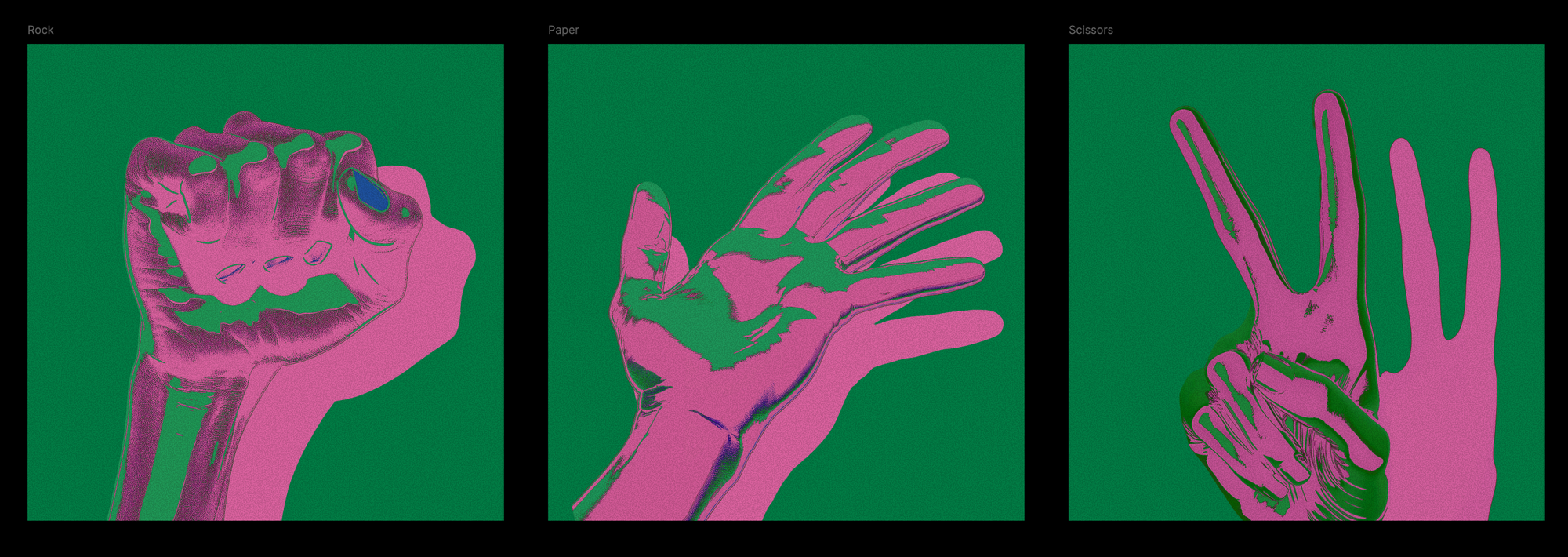
Thanks again to Paco for the design. Today he completes the set - with Scissors - technology, transformation, cutting/editing/generating.
Rock/Paper/Scissors. A great visual metaphor for what this research has shown. None always wins. Each one depends on the other.
Based on a series of group conversations with practising designers held in July and August 2026. Participants were promised anonymity for their employers; all names are first names only. Roughly half have worked with me at some point over the past twenty-five years, which bought candour and cost distance — read accordingly. Everyone quoted will be joining us for a webinar in September to argue about what it all means. My thanks to all of them. Some quotes have been lightly edited for readability.
Read Next

The Full Moon Podcast
Episode 8 — Conservation Projects and More


Conservation Projects
Everything is getting weird. How should brands respond?

Is AI stretching your people?
Guest essay
Comments