

What AI Knows and What It Doesn't

Introduction
What is a business? Or indeed, an organisation of any kind: an NGO, say, or a government department?
Here's one answer. It’s an organism that produces certain outputs. Nike produces shoes. Accenture produces strategic counsel. Pixar produces animated films, which look like this:
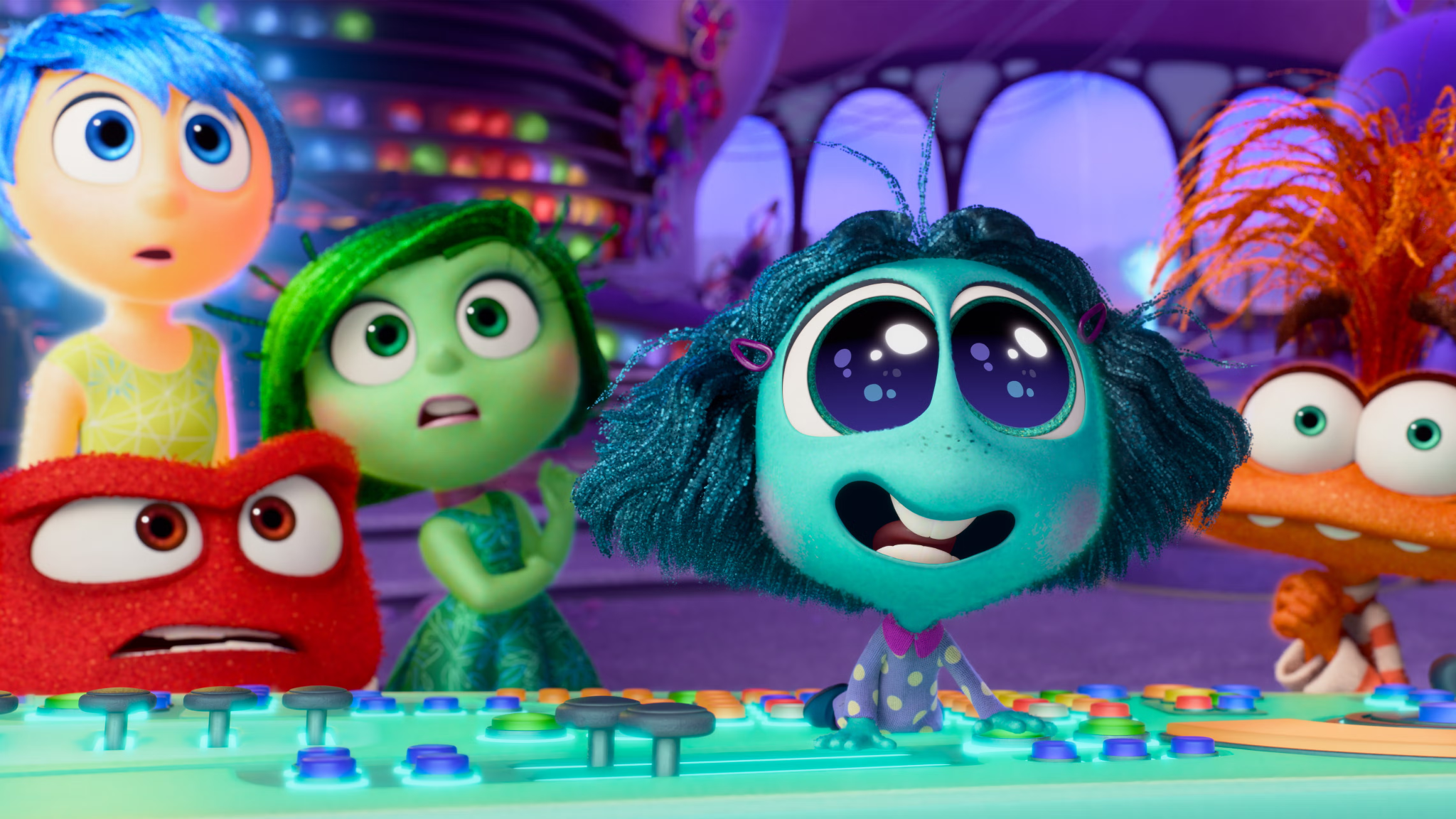
Every organisation, no matter how sprawling or complex, can be understood in this way. That is, it can be understood as an entity that outputs something.
But that definition only takes us so far.
To produce those outputs, the organism obviously needs to know how to produce them. Pixar needs to know how to make films. Nike needs to know how to make shoes. So an organisation is not just an entity that makes a thing. It is an entity that knows something. Underneath the making, there is the knowing.
Follow this logic and you arrive at a more powerful model of an organisation. You arrive at the idea, that is, that an organisation is at heart a knowledge organism. It acquires knowledge, cultivates it, moves it to where it's needed, and converts it into outputs, over and again. Everything else — the org charts, the Slack channels, the office space, the quarterly targets — can be understood as infrastructure in service of this core function.
But when it comes to the art and science of knowledge we are — as if you needed another reminder — amid a revolution. AI is (warning, bold claim ahead) the most significant knowledge technology since writing. Its implications are manifold. And among them are profound implications for every business and organisation.
Those implications are becoming urgent. And now, leaders must start contending with them.
Those leaders must ask themselves anew: what knowledge is essential to the creation of our outputs? How do we manage that knowledge? What do we actually mean when we say our organisation knows something? And those questions all funnel towards the deepest of all. That is: what even is knowledge, anyway?
What’s more, all those questions will play out at the level of the individual professional — the knowledge worker, the creative — too. Those individuals can also be modelled as people who know things that allow them to produce certain outputs. And in this way, AI poses just the same disruption to them as it does to organisations.
There is a rich tradition of thinking about these questions around knowledge. But that tradition, of course, is yet to contend with the arrival of intelligent machines. So as AI arrives, I want to interrogate that tradition, and ask what it can teach us about this moment.
Central to my argument is a deep truth. Knowledge is not all of one kind. Rather, there are two distinct and fundamentally different kinds of knowledge. And my argument is this: in the age of AI, the organisations that are not alive to this distinction — and that don’t manage it properly — will die.
It may take a while. They may go through various stages of decline and dysfunction first. But eventually they will collapse and die. Meanwhile, the individual knowledge workers and creatives who don’t understand this distinction will allow their most valuable asset — the essence that makes them what they are — to fade out.
At the heart of all this is the idea that the AI models emerging now are not the all-knowing beings that some want to claim they are. And organisations who believe that they are — who believe, that is, that AIs can know everything that matters — are about to fall into an existentially dangerous trap.
And the answer to all this? A lot of it will be about embracing what I've started to call enlightened inefficiency. That means doing hard, and human, things, at human speed.
But as usual, I’m getting ahead of myself.
In this essay, I want to explain these claims. And that means this essay is another step into what will become, for Full Moon, recurring terrain. That is, the terrain on which the age of AI collides with organisational culture.
This collision will be playing out for years to come. It demands that we renew our thinking on how an organisation’s culture works, what it does, what it really is.
Here at Full Moon, we’re strapping in for that journey. So let’s take a few steps forward.
Two Types of Knowledge
At the heart of my argument is a single idea. It is that there are two fundamentally different kinds of knowledge.
The idea that knowledge is not one thing but two has deep roots. For our purposes, we can trace its recent roots back to the Hungarian-British scientist and philosopher Michael Polanyi.
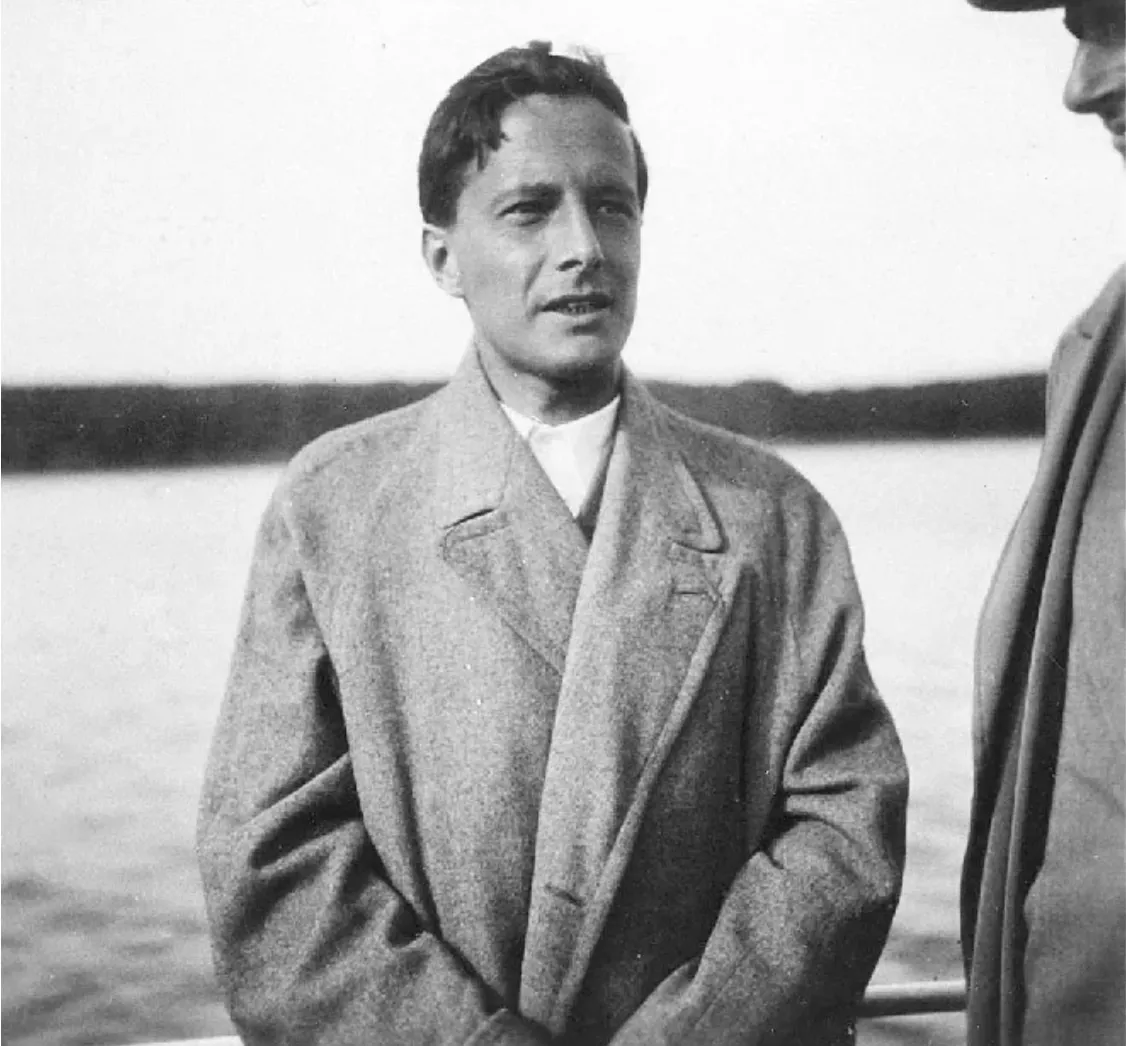
Polayni’s key philosophical insight on knowledge, expressed most fully in his 1966 book The Tacit Dimension, is captured in a formulation that became famous: ‘we can know more than we can tell.’
What did he mean?
Polanyi meant, simply, that not all knowledge can be instantiated in words. There is explicit knowledge: the kind that can be verbalised or written down. This is usually the kind we mean when we talk about knowledge, or refer to someone as highly knowledgeable.
But then there is a second, less tangible, more mysterious kind of knowledge. Polanyi called it tacit knowledge. It is the kind of knowledge that is embodied, practised, known through doing, and deeply resistant to articulation.
Take riding a bicycle. You can know how to ride. But you also understand that no amount of talking or writing about riding a bicycle can encode that knowledge in full. No amount of words can be the knowledge that is knowing how to ride a bicycle. It is a kind of embodied knowledge — a kind of muscle memory — that simply cannot be put into words. It is tacit knowledge.
Polanyi’s distinction between two types of knowledge is immensely valuable. And he made it, in part, to argue for the central importance of tacit knowledge in human affairs. Tacit knowledge, said Polanyi, is not a lesser or preliminary form of knowing, waiting to be upgraded into something that we can state. It is a fundamentally different kind of knowledge. And it is far more pervasive and important than we typically recognise.
From this inception, this distinction made its way into thinking on management and organisational culture.
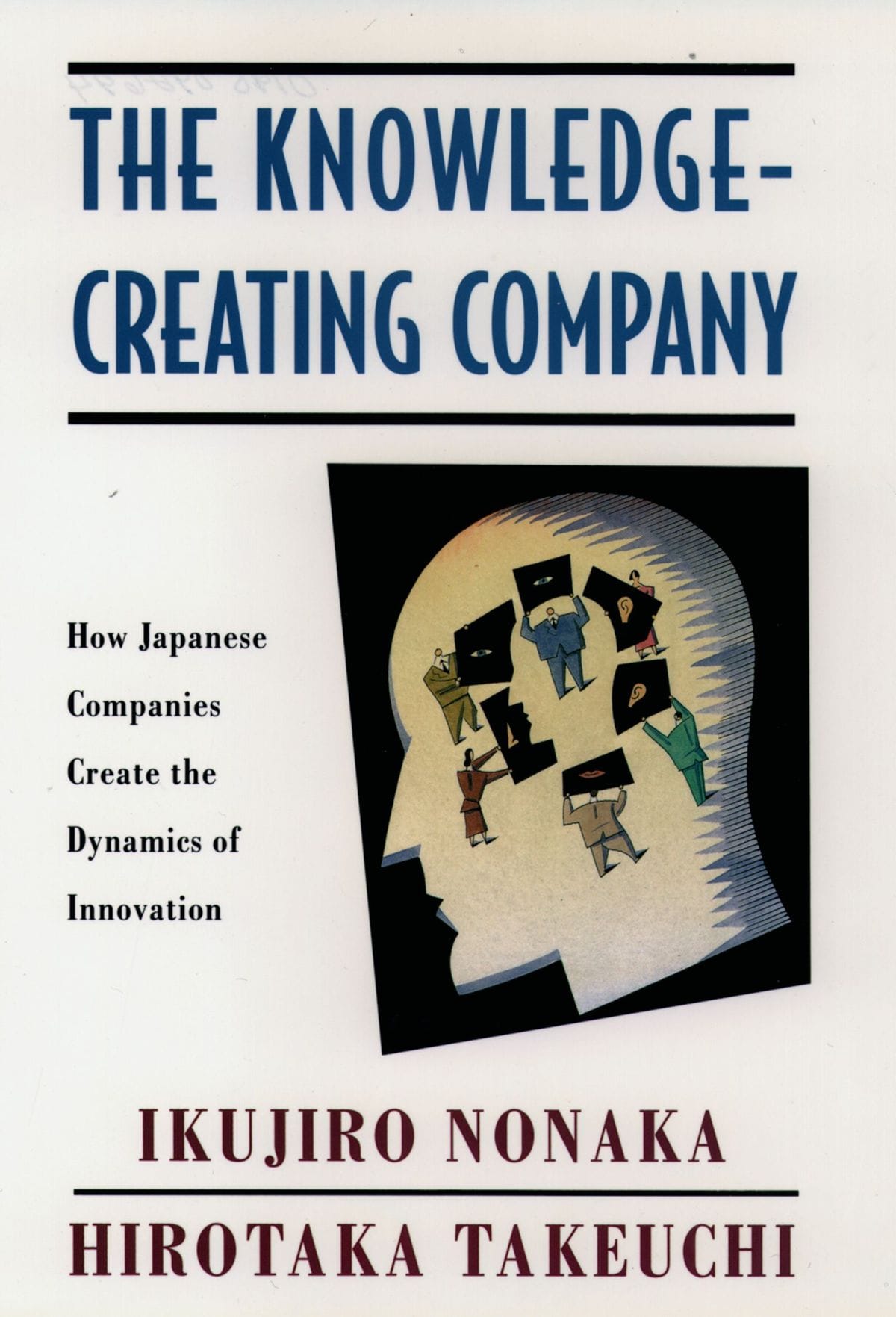
In the 1990s, the Japanese management theorists Ikujiro Nonaka and Hirotaka Takeuchi took Polanyi's philosophical insight and turned it into a theory of how organisations create knowledge. Their landmark book The Knowledge-Creating Company argued that competitive advantage comes from an organisation's ability to generate new knowledge, and that this happens through a dynamic interplay between the tacit and the explicit.
The distinction echoes through another famous book on organisational culture: The Social Life of Information, published in 2000 by the former Xerox Chief Scientist John Seely Brown and Paul Duguid.
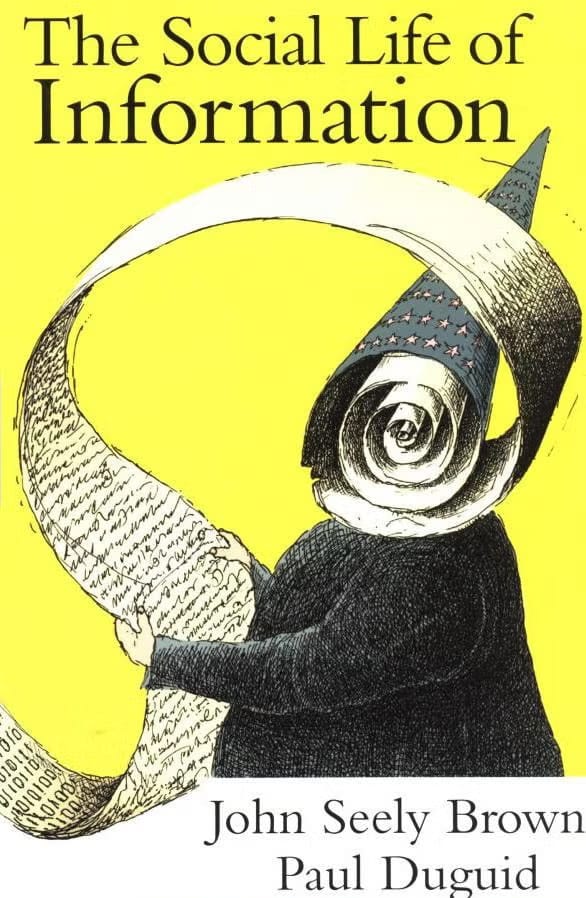
In that book, Brown and Duguid look at the way new technologies both create and rely upon hidden social networks.
In one famous case study examined in the book, Xerox found that its technicians rarely learned to fix difficult machine problems by reading repair manuals. Instead, they learned through what came to be called a ‘watercooler’ effect. They would hang out, swap stories about machine breakdowns, and share unorthodox repair tricks. When Xerox management tried to streamline this process and replace watercooler storytelling sessions with a formal knowledge-management database, it didn’t work. The rigid database missed the context, nuance, and storytelling that made the technicians' shared knowledge actually useful.
In other words, some of the knowledge these technicians were sharing was tacit knowledge. The kind that can’t simply be written inside a document or database.
Over time, though, the distinction between tacit and explicit knowledge faded somewhat into the background inside management and business thinking. It was overshadowed by flashier and more novel ideas. Lean! Agile! Digital transformation!
On the whole, that wasn’t a disaster. Mostly, organisations didn’t have to think that hard about the distinction because, in the end, their employees naturally carried both kinds of knowledge.
A senior employee at, say, a law firm carries lots of explicit knowledge when it comes to the law, but also lots of tacit knowledge: how to read the room in a client meeting, or mentor a junior colleague, or reject a bad idea without destroying someone’s confidence.
I think you know where I’m heading next.
Humans carry both explicit and tacit knowledge. But we’re about to shift into a world, we’re told, in which humans will work alongside a new kind of colleague: the AI agent. People and AIs, working together. And that shift makes the distinction between two fundamentally different types of knowledge urgent in a whole new way. In fact, it makes it a matter of existential importance for both organisations and the human knowledge workers inside them.
That’s because there’s a clear divide when it comes to AI and the two types of knowledge. Explicit knowledge is legible to AI; it is the type of knowledge that an AI can know. Tacit knowledge, emphatically, is not. A large language model can know Pythagoras’s Theorem. It cannot know how to ride a bicycle.
What we have, then, is a revolution that forces upon us a stark update to the distinction that Polanyi identified. His distinction was drawn in terms of human articulation. There is knowledge humans can tell, and knowledge we can’t. In the age of AI, we can redraw that distinction in terms of machine legibility. There is knowledge the machines can know, and knowledge they can’t.
And given the central role that AI is set to play in the creation, cultivation, and dissemination and deployment of knowledge in the years ahead, this is a distinction of vast importance.
The first thing organisations — that is to say, the leaders inside organisations — need to do is recognise that this distinction exists at all. There is a type of knowledge that is legible to AI, and a type that isn’t. And the type that isn’t is of vast importance. If there is one message you as a leader, knowledge worker, or creative take away from this essay, this must be the one.
Because if you understand this distinction, and work to become alive to the ways in which it functions inside your organisation and your professional life, you’re far more than halfway towards the entire argument I want to make here.
Your organisation, and you — yes you, the squishy, fleshy, human knowledge worker that you are — have explicit knowledge, but you also have tacit, embodied knowledge. And both are crucial to what you do.
Reflect on this. Doing so will pay immense dividends for your organisation, the team you lead, and your own career and professional or creative flourishing.
In the second half of this essay, I want to offer a framework for thinking about all this. In particular, I want to outline the way in which the existence of two kinds of knowledge — legible to AI and not legible to AI — poses two existential risks to both organisations, and individual professionals.
And I want to talk about how organisations — and how you — can respond.
Cognitive Resilience
Let’s deal first with explicit knowledge; the kind that can be encoded in words and transferred digitally via documents and databases. The kind that is legible to AI.
For this kind of knowledge, the LLM moment we’re living through now is — as we’re constantly hearing — an authentic revolution. They can transform the way an organisation encodes its knowledge, the way employees access and absorb that knowledge, and the way it is deployed.
I won’t spend too much time here on the nature of that transformation; I think we’re all pretty familiar, by now, with the many ways LLMs can transform knowledge work.
Organisations can, in principle, take their entire base of explicit knowledge and upload it to an LLM, creating a kind of organisational megamind that every employee can talk to endlessly. The global consultancy McKinsey did just that when it created Lily, a bespoke LLM trained on decades worth of McKinsey frameworks and industry knowledge.
Via this kind of AI tool an organisation can allow tens of thousands of employees essentially to talk to the organisational hivemind. To ask a question about the product roadmap, the legal position on a contract, the performance history of a supplier, the details of an internal policy. The efficiency gains here are real and they are enormous.
In practice, of course, creating this kind of tool means having or creating a foundation of data or content that an AI can work with. That’s a challenge for many organisations; but it’s one many will work to meet.
This is the AI revolution everyone can see. It deserves to be taken seriously, and it is being taken seriously. So far, so good.
But it comes with a deep risk. One that many of us are already starting to feel.
That risk manifests via two processes. First, when knowledge workers lean on AI for the first draft of any act of thinking — when the model becomes the default starting point for critical work — something starts to happen. That is, their ability to think critically, or independently, or creatively, starts to degrade in subtle ways.
Second, when employees start to talk to, and think with, LLMs more than they do with one another, then the intellectual and creative bonds between those staff start to wither. The result is less sharing of knowledge and ideas between people. That means less sharing in planned and structured ways, such as in meetings or workshops. But, probably more importantly, in unplanned and unstructured ways. You get fewer moments of impromptu inspiration or serendipity. Fewer moments to share that remark or fact that sends a colleague off in a fruitful new direction. You kill the watercooler.
The risk, then, is of a kind of organisational cognitive and creative decay.
The organisation’s explicit knowledge might be encoded in AI tools, and accessible to employees as never before. But via a million tiny cuts, the ability of the organisation to wrestle with that explicit knowledge, to bring human judgement, creativity, and weirdness to bear on it — to do new things with it — degrades over time.
Over time that will prove disastrous to any organisation that depends, in part, on innovating its way to new products and services, or solving novel problems, or responding to a changing world, or creating communications that have real impact on other human beings, or any number of other things. It will prove disastrous, that is, to pretty much every organisation.
Some readers might raise an objection here. If AI is going to continue to improve, do we really need people who can think? Can't we let AI do our thinking for us?
I have no doubt that the already stunning capabilities of AI will continue to improve. That AI agents will become even more capable of carrying out longrange, complex knowledge work tasks of all kinds. But is it capable of the kind of leftfield, creative, downright strange leaps of thought that can lead to a stellar new product, service, or experience? Or a marketing campaign that captures the zeitgeist? Or an ingenious new internal process? Few believe that we want to leave this kind of thinking entirely with AI.
And organisations must remember: everyone will have the AI. Every competitor and new entrant will have access to the same underlying intelligence. So the difference between organisations will not be in the quality of their AI. The difference will be in the quality of human judgment, creativity, and critical thought applied on top of it. The ability to ask the question the model wouldn't ask. To see the opportunity it can't frame. Mark dived into all this brilliantly in Who Designs the Future When Everyone Can?
Organisations that outsource their cognition entirely to AI will lose their most powerful point of differentiation. That is, their human cognition and creativity. Their ability to layer the original, unexpected, and authentically creative on top of AI outputs.
This, then, is the first risk. It is the risk of cognitive and creative decay. That kind of decay can happen invisibly at first; perhaps it stays hidden for years. But over time, it will degrade an organisation’s ability to do truly new things.
This risk, of course, doesn’t only exist at the organisational level. It exists for every knowledge work or creative professional as an individual, too.
Yes, LLMs can supercharge us as individual knowledge workers, allowing us to push our thinking further, deepen and hasten our research, and increase our output. All of that is wonderful. But it’s also a risky trade. What starts as a productive new method can become, over time, a reflexive habit. We find ourselves outsourcing our thinking to the LLM. We start every new thought chain with an LLM prompt. Over time, we find ourselves ever more stuck with the tramlines of machinic output. We reduce our ability to find the authentically new, creative, or weird.
If you use an LLM regularly, you’ll know what I mean. The habit sneaks up on you.
This is why I believe that in the coming decade organisations must develop a new kind of practice. This practice will be about cultivating the ability to work with LLMs while avoiding organisational cognitive and creative decline, and ideally while growing the ability to do critical thinking and creativity. It will be about, in other words, being able to interface with intelligent machines without degrading our own cognitive abilities; about protecting a trait we might call cognitive resilience.
I believe cognitive resilience of this kind will be a crucial and defining trait both for organisations and knowledge work professionals in the years ahead. We all want to tap the amazing powers of AI to supercharge our work. But the winning organisations will be those that do this and retain the ability to do critical thinking and creativity.
How does an organisation build cognitive resilience in the age of AI? This is a huge management thinking and organisational culture question for the years ahead, and I’ll be writing much more on it.
But in short: you build critical thinking and creativity skills in the same way you build muscles. That is, by using them.
For organisations and individuals, this will mean embracing various forms of inefficiency in the name of building cognitive resilience. It will mean special projects in which employees are tasked to think through a problem, or build a creative output, without touching AI. It will mean new kinds of norms around how to do some kinds of knowledge or creative work, including ideas such as in this organisation we think through each problem ourselves first, and write a bullet point report on it, and only then go to an LLM as a thinking partner.
It will mean encouraging — and by this I mean forcing — employees to continue to talk to one another about the problems they’re solving and the creative and innovation work they’re doing. Both in structured settings such as workshops, and at the watercooler.
And it will mean continuing to hire young entry-level employees, even though AI can do much of their work to an acceptable standard. Organisations that want to maintain cognitive resilience will come to understand that they must embrace the inefficiency that is hiring young, inexperienced, ineffective people, and turning them into older, more experienced, more effective staff. Yes, the work these young graduates do at first can mostly be done by AI. But if organisations don’t allow young entrants to do some of that work — even if the results are not used — then they’ll soon enough discover that they have no mid-level and senior staff capable of true critical thinking, strategic navigation, and creativity.
Think of all this as a new kind of enlightened inefficiency. Yes, it runs counter to our culture of constant short-term optimisation. But it will pay dividends in the longterm.
There’s much more to say on all this. And I’ll be saying more of it in future essays. But for now, let’s turn to the second big risk when it comes to knowledge in the age of AI.
The Invisible Extinction
The second risk is associated with tacit knowledge. And here, the danger is even deeper.
Remember, tacit knowledge is the kind that cannot be written down. The kind that is not legible to AI.
It is the knowledge of how we treat each other. How we resolve conflict. How we inspire. How we read the emotional atmosphere of a room, or de-escalate tension. How a team develops shared intuition across years of working together. How experienced people mentor less experienced ones: not through instruction manuals, but through presence, and example, and the thousands of small signals that constitute a working relationship.
It also includes the empathetic or emotional understanding that the staff of an organisation have for their clients or customers. That sense of truly understanding the people you’re trying to serve, the problem you solve for them or the need you fulfil, and how they feel about it.
As it sounds above, some aspects of tacit knowledge combine to form what we commonly call a ‘culture’.
It’s worth reflecting on the way that culture is a form of knowledge. It is something the organisation knows how to do. It is embodied, practised, transmitted through proximity and shared experience. It is, in Polanyi's terms, constitutively tacit; it can never be fully made explicit, because its essence lies in the doing of it. It is a kind of muscle memory held collectively.
And in these descriptions of tacit knowledge, we’re also able to see to the heart of the danger around it. Tacit knowledge, more often than not, is in some deep sense invisible. Mostly, it’s not recognised as knowledge at all. It’s seen as just an atmosphere, or vibe, or the way we do things here.
That invisibility has always been a problem for organisations. They’ve always been careless with their tacit knowledge; just look to the Xerox example I gave earlier and the attempt to replace watercooler learning with a structured database.
But the emergence of AI makes this problem acute in a new and profoundly powerful way.
Because when organisations replace human staff with AI agents, what will be lost is precisely this kind of knowledge. And in the overwhelming majority of cases, it will be lost because no one saw that it was there in the first place. The result is that the organisation loses the ability to speak human, and to be human both internally and to clients and customers.
This is not a hypothetical. There are already examples.
In 2024, Swedish fintech Klarna replaced large numbers of its customer service staff with AI agents. The initial results looked impressive. The AI was able to handle most customer interactions. And, of course, it did it all much faster, and at lower cost.
Then the picture changed.
Customer complaints rose. People described the AI responses as generic, repetitive, unable to handle nuance. What was going wrong?
I’d argue this is an already-iconic example of an organisation throwing away tacit knowledge via the embrace of AI agents.
The AI agents could handle the explicit dimension of customer service perfectly well: answering questions, processing requests, surfacing information from the knowledge base. But they could not handle the tacit dimension. The judgment of how to deal with a human being who is frustrated, confused, or unhappy. The instinct for when to throw away procedure and do something else. The ability to make someone feel genuinely heard. That was embodied knowledge, held in the practices and the instincts of the human agents. And when those humans were removed, it vanished.
By 2025, Klarna's CEO Sebastian Siemiatkowski was publicly acknowledging that the company had gone too far. Klarna began rehiring human customer service staff.
This story is an example of the loss of customer-facing tacit knowledge. But there will be many such stories about the loss of internal tacit knowledge — the kind that plays out between staff — too.
When you thin out the human layer at scale — when experienced people are replaced and new joiners have fewer colleagues to learn from through proximity — the tacit knowledge of how to collaborate, push each other, build trust, navigate disagreement productively, inspire, and so much more begins to drain away.
It will often happen slowly at first, and then all at once. And remember, removing human staff doesn’t only thin out the tacit knowledge inside the organisation; it also breaks the mechanism by which tacit knowledge is created and transferred. Tacit knowledge is created and transmitted primarily through shared experience, co-presence, apprenticeship. A new joiner learning ‘how things are done here’ by being around senior colleagues who embody the practice. All of that goes when people are replaced by AI agents.
Now, there is a tempting objection to all this. If your organisation can be one hundred per cent AI — no humans at all, top to bottom — then perhaps none of this matters. Perhaps tacit knowledge is an irrelevance in a fully automated entity.
But for the vast majority of organisations, that is not the world they inhabit and it is not the world that is coming any time soon. Humans will remain essential for the creative leaps, strategic judgment, customer relationships, and for so much other work that requires genuine understanding of human beings.
And if you let tacit knowledge drain away while those humans are still there, you are left with something genuinely dysfunctional: an organisation that has lost its embodied intelligence but still depends on human beings who no longer know how to work together effectively.
So what can organisations do? Again, there is much to say on that. But some thought starters:
The first step is the most fundamental, and it sounds almost absurdly simple: acknowledge that tacit knowledge exists. Recognise it as knowledge. Not merely as vibe, or atmosphere, or common sense. These forms of embodied and relational knowledge are things your organisation has learned to do. And it can unlearn them.
The second step is to ask: what does our organisation know how to do that isn't written down anywhere? Where does that knowledge live: in which teams, which relationships, which practices? If those people left tomorrow, what would we lose that we couldn't reconstruct? Most leaders never ask these questions. In the age of AI, they become urgent.
Third: before you replace a team or a function with AI, ask what tacit knowledge that team carries. That's about seeing beyond the explicit tasks that the team performs or the outcomes they produce, and looking, say, to the judgement they exercise, or the emotional intelligence they deploy. What form does this knowledge take? What do new joiners learn from being around this team? If you can't answer these questions, then you risk burning tacit knowledge.
And fourth: invest in the conditions through which tacit knowledge is created and transmitted. That means co-presence. It means apprenticeship. It means protecting the time and space for people to work alongside one another in ways that aren’t captured by a productivity dashboard or optimisation metrics.
Insisting on these questions, and on the importance of tacit knowledge, will often require courageous leadership. It's easy to celebrate efficiency gains and reduced costs; they are instantly and easily visible as a win. It's harder to prioritise the mostly invisible, unmeasurable, and somewhat mysterious embodied and relational knowledge that allows your organisation to do what it does.
Start With Two Questions
It’s time to bring this in to land.
There are two types of knowledge inside every organisation. And AI poses a distinct risk to each.
On the explicit side, the risk is degradation. The knowledge persists, but the organisation's capacity to think independently and creatively with that knowledge atrophies as people outsource their cognition to models. The lights are on, but over time fewer and fewer people are at home.
On the tacit side, the risk is extinction. The knowledge itself disappears, often without anyone noticing it was there. And because tacit knowledge is transmitted through human proximity and shared practice, this loss isn’t an isolated event; it breaks the mechanism via which this kind of knowledge is created and renewed. And once it's gone, it is extraordinarily difficult to rebuild.
These are vast and deep challenges, and we'll be talking about them for many years to come.
But leaders who want to get started today should begin with two questions. Questions that have been implicit in this essay:
First: how are we ensuring that our embrace of AI does not degrade our people's ability to think critically and creatively? How are we keeping the human critical thinking and creative muscles strong, even as we deploy machines that can think alongside us? Are we using AI to augment human thought, or to replace it?
Second: what is our tacit knowledge? Can we even name it? Do we recognise it as knowledge at all? And how are we ensuring that in the race to deploy AI, we do not destroy the human fabric through which that knowledge lives: the relationships, mentoring, co-presence, and shared practices that make us who we are, and able to do what we do?
And those are questions any individual knowledge worker or creative should be asking themselves in earnest, too.
The rise of intelligent machines is an epic, epoch-shaping moment. And there’s so much about it that we can embrace. The new creative and knowledge work potential it offers us is immense.
But the deepest truth of all here is stark: the organisations that win will be those that can avail themselves of that potential and retain the ability to think critically, to be authentically creative, and to speak human.
Those that can’t — that allow themselves to be entirely captured by the vast and powerful Averaging Engine that are frontier LLMs — will first become undifferentiated and dysfunctional. And, then, in time, they will die a deserved death.
Avoiding that fate means thinking hard, now, about what AI can know and what it can’t. So take that challenge to your team. And come back to us here at Full Moon to let us know how you got on.
Read Next


Conservation Projects
Everything is getting weird. How should brands respond?

Is AI stretching your people?
Guest essay

Sign up for our webinar on how AI is changing Design
Event series
Comments