

How is AI changing Design?
Part I

Designers tell us what’s changed, how they are responding and what it means for the future.
Part 1 - What's Changed
Over July and August, Full Moon ran a series of group conversations with practising designers, and asked them all a version of the same question: not what AI might do to design, but what has actually changed in the work over the past year. We are publishing this in three parts - today (the Sturgeon Moon!), Monday 31st August and Wednesday 1st September. Enjoy the series.
What we found should matter to anyone in the business of building, creating and marketing products and experiences. If you design, or lead a product team, or manage designers and developers, this is for you. Likewise if you are trying to transform your organisation under pressure from AI driven change.
In fact, reviewing the whole output, I have realised almost all the insights apply to knowledge work in general. We may have set out to investigate design, but it turns out that what the designers said is universally applicable to how we work in 2026.
At the start of most of the calls everyone was asked for a single word describing how they feel about AI and design right now. The list that came back included: ambitious, optimistic, curious, excitement, frustrated, frenetic, misaligned, unknown, conflicted, stressful, fatigued, soon to be, system. Offered by a design teacher on behalf of his students rather than himself, overwhelm.
That is not a profession with a fixed position, so much as a profession with weather systems blowing in and out, and the thing that stands out about the list is how little it maps onto the very binary argument on the internet about the future of work, in which the technology enthusiasts occupy one side, the sceptics the other, and each accuses the other of missing the point. What these conversations kept turning up instead was that the split runs through individual people rather than between them, and that most designers are holding two theoretically incompatible positions simultaneously. As we have said before, humans are messy.
Wolfgang, a software developer and organisational theorist in his fifties, answered the one-word question with "to me it's a big opportunity and the window is very short", and then, less than a minute later, having described in some detail the extraordinary things he can now build on his own, said: "I just hate it." Asked about the contradiction, he did not really accept there was one. He holds both, and so, in various ways, does nearly everyone else here.
Full Moon has covered this ground before. Towards the end of last year and the beginning of this one we published two essays on where design was heading, the second of which was called Who Designs the Future When Everyone Can? The point of returning now is not to check what we got right and wrong. It is to check in with the people who do the work for a living. Some of what we claimed then now has new evidence behind it, some of it needs sharpening with nuance (can you do that?), and a few directions were simply wrong. Those corrections appear where they belong as we go through the key points we heard.
A note on method and on bias. We held eight conversations, with three to five people in each, roughly an hour, mixed by sector and by seniority. Between them the group works in a large retail bank, in two national governments, in management consulting, in big tech, in industrial design, in universities, in agency ownership and in independent practice, across Europe, the United States, the Middle East and Asia-Pacific. Roughly half of them are people I have worked with at some point over the past twenty-five years, which is a bias to declare: but I think it brought a candour and trust to the discussions. Employers have been disguised throughout and everyone is referred to by first name only.
Faster, not better
First up, and something we should all be concerned about - not one person in the group said that AI had improved the quality of their work.
They said a great many other positive things - notably that creation of prototypes and working models is now the key focus a lot of the time. They said this made them faster, broader, that it let them cover more ground and test more options and hand over something more complete. It has never been easier to build and experiment. An Experience Design Leader, Duygu, says;
“I think research time has been greatly impacted, I feel like I have more tools to tap and get to result which gives me super powers in some contexts and also gives me more depth. And I became more of a doer myself less reliant on others to produce the work. I have really stretched my comfort zone and this really excites me. I have more and more on my to do list, but again the energy usage is important for me. I am really proud of the work I do more.”
Adrian, who has done service and business design in both San Francisco and Europe, put the distinction as carefully as anyone: "in terms of craftsmanship, yeah, I don't think it's improved, but in terms of the completeness of what you're handing over, I think there's a lot more you can test and explore." Eli, a visual design lead at a large bank, made the same separation more bluntly, and caught her own contradiction as she made it: "It's getting easier. But at the same time, I don't think this is equal to better design." Matthew, who founded a data visualisation studio, sold it and now works independently, called out how the quality gets lost, which is not incompetence but rapid low level satisfaction - "there's a lot of good enough… I'm seeing people settle for, oh yeah, we managed to crank this out quickly, it kind of looks good enough" - and then extended the charge to the profession itself: "even from designers or creatives, I think there's a little bit less discernment in the rush to get things out quickly." Asked directly whether it was quality or quantity that had improved, Dave, who works on the AI experience layer for large enterprises, thought about it for a moment and answered: "reach."
Faster, broader, further. But not better. That is close to a truism some of us suspected, were it not for the explanation that Alex offered, which is one of the key insights to come out of the research. Alex is an industrial designer of fourteen years' standing, working agency side on physical products that have to be manufactured, shipped and sold, and when asked how AI fits into his practice he said:
"What we find is the more you know what you want, the harder it is to work with it."
Then, by way of illustration and a rule underneath:
"It's like coercing a toddler into position and be like, do it, do it, do it. If you're willing to be surprised, it's great. But if you know what you want out of it, it's a pain in the ass at the moment."
This inverts a great deal of what is claimed, because almost every productivity argument for AI - often based on research – states that leverage of the tools rises with craft experience, and Alex is describing the reverse. Broad levels of acceptance, rather than expertise, seems to predict how much the tool helps design. Vague intent produces acceptable outcomes; precise intent produces friction. Which means the leverage is lowest exactly where craft knowledge is highest - where somebody can already feel the finished thing clearly (or knows not-quite-right when they see it) and simply wants to get it out of their head. I use the word feel there deliberately.
Michal, who founded and runs a company of designers in central Europe, still draws by hand and gets teased for it.
"People laugh at me that we still think about where to put a button, but if the button is in a very complex system it really matters, and actually drawing it yourself instead of spending all of your tokens for a day and waiting until something that you did not expect to come out will come out - it just makes sense to do it yourself."
The most interesting response to Alex's paradox comes from Shelley, who has spent a long career in design learning - a good deal of it alongside me - and who has built a working practice around exactly this problem rather than complaining about it. She now declares her mode before she starts. "Part of what I always do now is define whether I'm in get-things-done mode or I'm in explore mode," she says, and describes the impact of that small piece of self-instruction as "huge, huge". The tool behaves differently depending on which mode you are in, so she tells it, and herself, which one she is entering.
She also asks the model how the collaboration itself is going and how she might improve it. On being told to be more specific in her instructions, she declined, on the grounds that specificity is not always where her value lies: "I like to underdetermine things."
That is a very good description of what (senior?) designers are actually for, and it happens to be the thing the tool cannot help with and implicitly discourages. Shelley taught a course on prompt writing early in 2026 and watched the material atrophy within months. A fair amount of what any of us learn about working with these systems has a short half-life. This also speaks to a theme we heard a lot of in our research with young people earlier this year, of the sheer effort required to stay up to speed.
Insight: AI's design leverage is inversely proportional to the precision of your intent. It is a generous instrument for people who do not yet know what they want, and a sometimes awkward one for people who do. The profession has spent three years arguing about whether AI can design; the more useful question may be who it designs for best. How do we balance confidence and competence as one participant asked.
The words in between
There is a mechanical explanation for Alex's paradox, and it emerged in one of the later conversations, when Peter - who leads product and design work out of Slovakia and London - said something that reframed a good deal of what had come before it:
"Language is like a really good representation of a real world, but it's not the real world. It's not tactile. It's not emotional. It's not embodied. And basically you spend a lot of time in your head, not in your body, not in the other ways of perceiving."
The implication became clearer to me as we talked it through. If you were working in a design tool - certainly in the ‘old days’, but really any time before about three years ago - you physically pulled out the shape and then you coloured it. In fact before digital you just drew it. In this hands on process, you are not describing what you want, you are doing what you want. And now, increasingly, you are using AI, text and speech, to describe.
What has happened, in other words, is that we have inserted a new filter or layer between the designer and the thing being designed, and that filter is language. This is not a small change. It is arguably the most consequential thing about generative tools for anybody whose craft has historically lived in the hands and the eye, and it has three consequences worth separating out.
The first is imprecision, and this is Alex's toddler in action. A pencil line is the line you want (if you have a steady hand), adjusted continuously as you draw. A sentence describing that line is an expression of your intent filtered at least three times. First by your chosen words, then by a system that decompresses your words and then translates its understanding to a graphic. The more exactly you already know what you want, the more the compression can cost you - which is why the tool can be frustrating to the most experienced people.
Daljit, who has been founding design companies for thirty years, put the professional version of this characteristically bluntly:
"We all know designers are not very good at communicating by language. I mean, they're bloody terrible, which is why they generally turn up doing that. And then you're left with the interpretation of the language model to take what you're thinking and turn it into something, and it finds the best fit, and it's never - well, at the moment it's never right."
I suspect a significant proportion of people become designers precisely because visual and spatial thinking is where they are strongest and language is not. We have just built a set of tools whose entire interface is the thing that group is less geared up for, and then cheerfully rationalise the result as democratisation.
The second consequence is the mediating layer itself, quite apart from any loss of precision. Something is different about designing at one remove - about thinking in your head rather than through your hands. Peter's phrase for what is missing is "not in your body, not in the other ways of perceiving", and it connects directly to what Alex described about losing the middle of the process. A lot of design knowledge is discovered in the making rather than decided before it: you draw the thing badly, you see why it is wrong, and the correction arrives through your eye before it arrives in your reasoning. If that loop goes through textual description you both slow it down, and change what kind of loop it is.
The third consequence follows from the other two: language may be a significant part of why everything is starting to look the same. If a whole profession is describing what it wants in broadly the same vocabulary, and the system's job is to find the best fit for that vocabulary, then convergence is not just a cultural trend. It is the result of thousands of people reaching for the same adjectives and the system responding with known and self-reinforcing patterns.
The counter-argument came from Ty, who co-leads AI and design work inside a large consultancy:
"Words are super democratic, and they also scale across. I can talk to a five-year-old with my words - "hey five-year-old, I need this, you need to do that" and get a reply back ("well dad, I need this, I need that") and it has an effect on the person I'm speaking to the same way it does with an adult, and the same way it does with somebody who lives in Delaware, and the same way it does with somebody who lives in Mykonos."
And then, pointedly, at his own profession:
"I do get a little surprised that designers want to kind of close the lid on language, because that's so aggressively democratic. It's like — language moves nations."
He has a point, and the two positions are not easily reconcilable. Language is the most widely distributed capability our species has, and building creative tools on top of it genuinely does hand capability to people who had none. It also disadvantages the group whose expertise was specifically non-verbal, and flattens the variety of what gets made. Both of those are true at once.
Insight: the shift from doing to describing has installed language as an intermediary between designer and artefact. That layer is lossy, it disrupts the loop in which craft knowledge is actually discovered, and it may be driving the sameness everyone is complaining about. Yet it is also the most democratic interface for visual expression ever built.
Where the speed goes
Everybody reported substantial speed gains. Nobody reported having any more time. Dave put it most plainly:
"None of us on this call have answered any question with, oh, now I can just sort of fold my hands and watch it work. If anything, it's the opposite. We're doing more. You're sort of moving up in altitude, but your work level doesn't go down."
The speed, in other words, has not led to an efficiency uplift; it is spent as fast as it arrives, on wider scope and more output and higher expectations, and the expectations seem to have arrived faster than anything else. I wrote about this before – the risk that AI creates more to do, more busy-ness, not less. This affects corporations way beyond the practice of design, and we are going to hear much more about it in the next few years. For many collaboration has improved across teams – but that’s not universal - for Duygu:
“I see how some very basic conversations in a meeting became inefficient with people immediately looking details in the tools, and trying to solution…..and getting lost on the original question or the right diagnosis of why are we doing this? And where did we start in the first place? I think we need more clever orchestrations needed in some calls, which is what I am trying to do and is driving me crazy. The chaos of this, and the inefficiency it creates is incredible and fascinating.”
Joumana, a design director in Dubai, described what she now finds herself saying to clients, one of the most challenging statements in the research:
"Fine, I'll do it for you in two days even. But you as a human being are incapable of taking a decision as fast as I design."
Production accelerated; decision-making did not. The bottleneck has moved from the making to the approving, which is a part of the process that nobody has designed for and almost nobody measures, and Joumana expects consequences: "not giving enough space for thinking, and I see a wave of things starting to break soon."
Overall, the thing being squeezed hardest is not production time. It is reflection time. The interval - in which you look at what you have just made, work out what you think about it and carry that judgement into the next thing - has been compressed almost out of existence. I don’t think that’s hyperbole. Several people described the sensation with some precision.
Eli was the most direct about what it does to her:
"I'm frustrated because it's everything in really fast-moving speed that I don't have even time to reflect on what I'm thinking. And one day I feel like really excited and the other day I'm feeling like really overwhelmed. And I'm always constantly behind everything."
I don't have even time to reflect on what I'm thinking is a fairly devastating description of a knowledge worker's condition; note that it is not a complaint about workload. It is a complaint about not being able to catch up with her own mind.
Peter identified the mechanism by which the tool itself eats the reflective interval, and gave it a name - the AI recoil. The system is relentlessly agreeable and forthcoming, and:
"it also kind of steals your focus or attention, suggesting another course of action, another follow-up question. I see it in many younger designers following up this rabbit hole but not knowing that this rabbit hole is a dead end."
There is always a next prompt available, always another variation one instruction away, and the moment where you might have stopped and thought is exactly the moment the interface offers you somewhere else to go. Reflection has to be actively defended now, in a way it did not when the next step involved effort.
Some people are defending it, deliberately. Lucia, who does research and foresight work, almost quantified the cost in bodily units - "yes, I can crunch quicker through bigger breadth and depth of information, but I'm also more tired" - and has begun scheduling offline time specifically to recover her brain. Shelley's habit of declaring which mode she is in before she starts is the same instinct applied at the other end: a small, deliberate pause inserted into a process that no longer produces pauses of its own. George, a product designer of thirty-one who holds an explicit AI remit inside his agency and is about as enthusiastic as anyone here, described what happens when nothing is defended: "it's more like brain fry. You get to the end of the day and you're like, what have I done."
There is also something disappearing from the middle of the process, and it is telling that the analogy Alex reached for was a pandemic one rather than an AI one:
"I remember during COVID everyone went remote, and one of the things I really remember missing is that sort of looking over someone's shoulder and seeing what they're up to. Got a similar situation where you're kind of hitting a button and it's spitting out an answer and you're missing the bit in the middle where you sort of work through and spend time with a problem. It's just this sort of design machine that spits out solutions and you kind of hope it's right."
Nathan, who has just moved from a design consultancy in Tokyo into a university, answered him without a pause: "which is in a way the worst kind of design machine."
Nick, who runs a service design practice from Hawaii after two decades inside the large consultancies, described what all this compression does to ambition, which is to shrink it: "we're looking at our feet a lot more than we used to, and so you're never getting to those big moments." His summary was that this is evolution over revolution, which is an interesting thing to have to say about a technology sold almost entirely on utter transformation.
Insight: the speed is spent not saved - and the first thing it has spent out of existence is reflection. Production time compresses; judgement much less easily. Any organisation serious about quality will now have to schedule thinking deliberately, because the workflow no longer produces it rhythmically. And the risk is that nothing is ever really finished because of the volume of options, generated with velocity, at each stage.
Part Two - 'Consequences...Who is Holding the Tools' to be published on Monday 31st August. Part Three 'What A Designer is for Now' arrives Wednesday 2nd September. If you are not a member, sign up here - www.wearefullmoon.com to get all this and more.
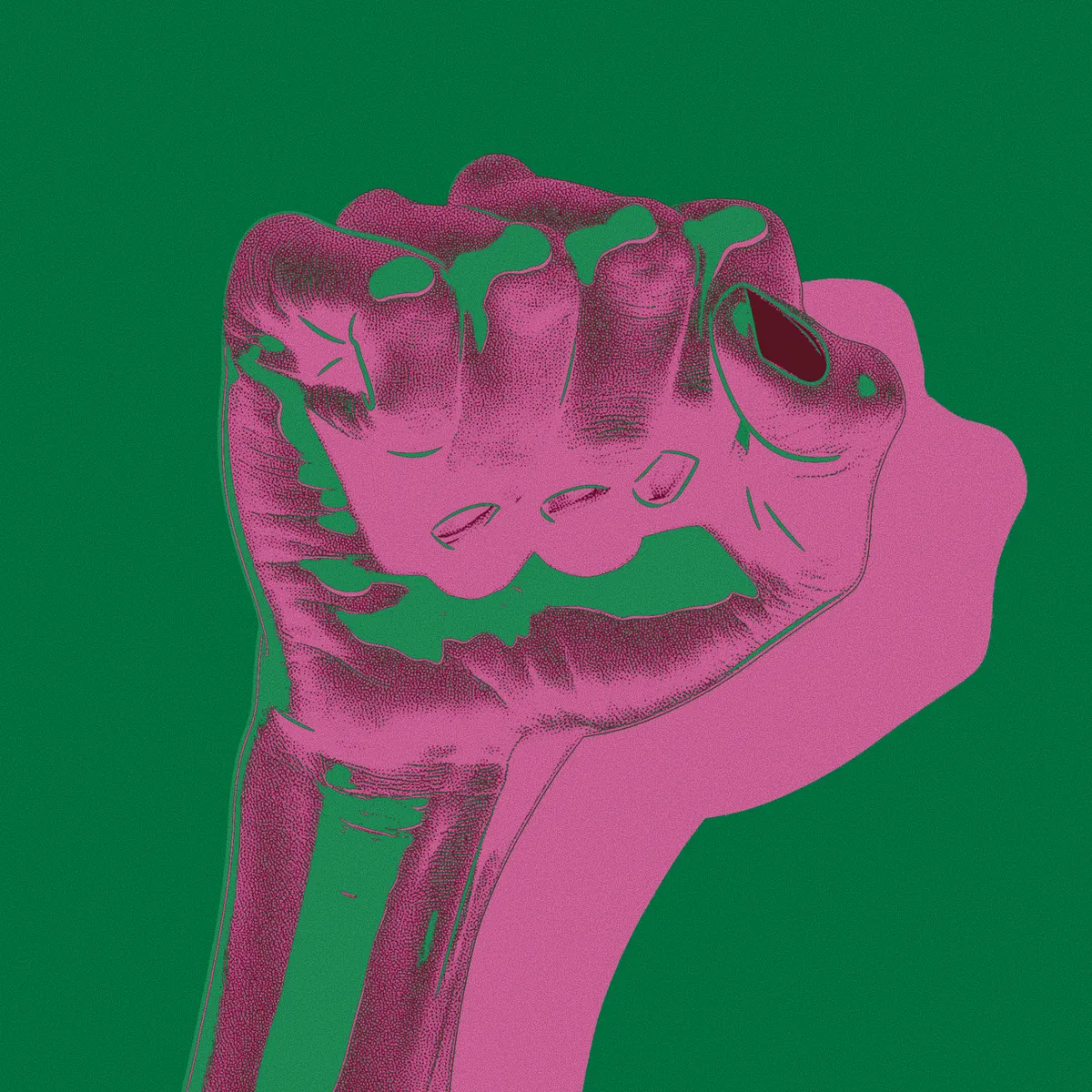
Also, I want to pay tribute to Paco's super design idea here - each part is illustrated with a hand playing a well known game. Today its Rock. As he says - the human, the physical, craft, making with your hand.
Based on a series of group conversations with practising designers held in July and August 2026. Participants were promised anonymity for their employers; all names are first names only. Roughly half have worked with me at some point over the past twenty-five years, which bought candour and cost distance — read accordingly. Everyone quoted will be joining us for a webinar in September to argue about what it all means. My thanks to all of them. Some quotes have been lightly edited for readability.
Read Next

The 'Techlash' and that Musk interview
Or why your future is to be a Labrador.

Tell us about AI and design
Second round of research

Summer Holidays, and a best of Full Moon taster
Tonight the Buck Moon is full

The Full Moon Podcast
Episode 7 — Customer Love is Rarer Than You Think
Comments